


Orders
.png&w=48&q=75 "login")
Profile


Wallet

8 Herbs for Fertility: What the Evidence Actually Shows


MBBS, DGO · 41 years experience
 456 Likes|
 12 min
AI-Generated Summary
Quick overview in 30 seconds.webp&w=32&q=75)
- Ayurvedic fertility herbs like Shatavari, Ashwagandha, and Shilajit have been used for centuries to regulate hormones, improve egg and sperm quality, and enhance reproductive health naturally.
- For women, herbs like Lodhra, Chasteberry, and Shivlingi Beej help regulate menstrual cycles, improve cervical mucus, and boost fertility while reducing PMS symptoms and inflammation.
- Safed Musli and Shilajit are excellent for male fertility, increasing sperm count, motility, and sexual function, while Milk Thistle supports hormonal balance and protects reproductive organs.
- Looking for trusted Ayurvedic herbs to support your fertility journey? Explore our Get Pregnant Bundle 1 Month Plan - PCOS & PCOD Tea, Wheatgrass Powder, Shatavari Powder - (Pack of 3).
 4.1
4.1Quick answer
Herbs cannot cure infertility, and none has strong evidence for helping you conceive. Some, including ashwagandha for male fertility, have early and limited data. They may be reasonable alongside medical care, and they are not a substitute for it. The most important thing on this page is not a herb. It is knowing when to stop waiting and get tested.
Key takeaways
Time is the factor that matters most in fertility, and it is the one thing herbs cannot give back. Get evaluated after 12 months of trying, or 6 months if you are 35 or over.
Herbs are not free of side effects, despite what they are usually sold as. Several interact with medication, and contamination is a documented problem with unregulated products.
A semen analysis is inexpensive, quick and often the most informative single test. Male factors contribute to a large share of infertility and are frequently checked last.
No herb fixes blocked tubes, absent sperm, endometriosis or a structural problem. These need diagnosis and treatment.
Tell your doctor everything you are taking. Some herbs interfere directly with fertility medication and IVF cycles.
Can herbs actually boost fertility?
The honest position: for most of the herbs in this article, there is little or no good human evidence that they improve the chance of conceiving.
A few have small studies behind them, mostly for male semen parameters rather than for pregnancy rates, and those studies tend to be small, short and often funded by the companies selling the extract.
Two things are worth separating. Traditional use over centuries tells you a herb has been used, and often that it is reasonably tolerated. It does not tell you it works. Those are different claims, and fertility content routinely blurs them.
Where herbs may reasonably fit: alongside medical assessment, for general nourishment, with your doctor's knowledge, in a branded product with verified ingredients.
Where they do not fit: as an alternative to investigation, or as a reason to wait another six months before seeing a doctor.
The most important section: when to see a doctor
This comes before the herbs deliberately, because delay is the single biggest avoidable problem in fertility, and success rates fall with age in a way that no supplement compensates for.
Seek evaluation if you have been trying for:
Your age | Time to seek help |
|---|---|
Under 35 | 12 months of regular unprotected sex |
35 to 39 | 6 months |
40 and over | Straight away. Do not wait |
Seek help immediately, whatever your age and however long you have been trying, if:
Your periods are irregular, very infrequent or absent, which our guide to causes of a delayed period covers
You have been diagnosed with PCOS, endometriosis or a thyroid disorder
You have had pelvic surgery, a pelvic infection, or an ectopic pregnancy
You have had two or more miscarriages
Your partner has a known sperm problem, a history of undescended testes, testicular surgery or injury, or has used anabolic steroids
Either of you has had chemotherapy or radiotherapy
You have very painful periods or pain during sex
What early evaluation usually involves: blood tests for you including thyroid, prolactin and ovarian reserve, an ultrasound, a test of whether your tubes are open, and a semen analysis for your partner. Most of this is straightforward and much of it is available at government facilities.
A semen analysis should be one of the first tests, not the last. It is inexpensive, takes days rather than months, and male factors contribute to a substantial proportion of infertility. Our guide to how sperm is collected and prepared for IUI explains what is involved.
The 8 herbs, honestly assessed
Herb | Traditionally used for | What the evidence shows | Main cautions |
|---|---|---|---|
Shatavari | Female reproductive tonic | Best-studied as a galactagogue for breast milk, not for conception. Little human fertility evidence | Generally tolerated. Avoid if you have hormone-sensitive conditions without advice |
Ashwagandha | Stress, male fertility | The most-studied item here. Small randomised trials suggest effects on semen parameters and testosterone. Studies are small, short and often industry-linked | Case reports of liver injury exist. Affects thyroid hormone levels. Interacts with sedatives and immunosuppressants. Not advised in pregnancy |
Shilajit | Male vitality | One or two small studies on semen parameters. Not established | Unpurified shilajit can contain heavy metals. Source and purity matter enormously |
Safed musli | Male vitality | Largely animal data. Human evidence is limited | Limited safety data |
Chasteberry (Vitex) | Cycle regulation, luteal phase | Some evidence for premenstrual symptoms. Evidence for conception is weak and mixed | Affects prolactin and hormone levels. Can interfere with fertility medication and IVF. Interacts with dopamine agonists and hormonal contraceptives. Stop once pregnant. Discuss before use |
Lodhra | Women's reproductive health | Essentially no human fertility evidence | Limited safety data |
Shivlingi beej | Traditionally taken for conception | No meaningful human evidence | Limited safety data |
Milk thistle | Liver support | No fertility evidence. Its presence on fertility lists is not well explained | Interacts with several medicines through liver enzymes |
A fair summary: ashwagandha has the most human data, and even that is early rather than settled, and it carries real cautions. Chasteberry is the one most likely to interfere with medical treatment. The remainder sit on tradition rather than evidence.
Safety: herbs are not automatically safe
This is where most fertility herb content is misleading, and the correction matters.
Contamination. Published testing of some traditional and herbal preparations sold in India and abroad has found lead, mercury and arsenic. The risk is higher with unbranded, loose or poorly purified products, and shilajit is a recognised example.
Interactions. Herbs interact with thyroid medication, blood thinners, diabetes medication, blood pressure medication, sedatives, immunosuppressants and hormonal treatments. Several also interact with fertility drugs.
Liver injury. Herbal and dietary supplements are a recognised cause of drug-induced liver injury, and ashwagandha specifically has case reports associated with it.
Dosing is unregulated. One brand's shatavari powder is not equivalent to another's, and traditional preparations vary widely.
If you choose to take something:
Tell your doctor and your fertility specialist, including every Ayurvedic, homeopathic and gym product
Stop before starting fertility treatment unless your specialist agrees otherwise, because some herbs directly affect hormones the treatment is trying to control
Buy from a reputable manufacturer with a licence number and a full ingredient list
Avoid loose, unbranded or unlabelled preparations
Stop and see a doctor if you develop yellowing of the eyes or skin, dark urine, persistent nausea, abdominal pain or unusual fatigue
Stop as soon as you have a positive pregnancy test, and tell your doctor what you were taking
What genuinely improves your chances
In rough order of impact.
1. Time the fertile window correctly. Your fertile window is roughly the five days before ovulation and the day of ovulation itself. Having sex every one to two days through that window is more effective than saving up or aiming at a single day. Ovulation kits, cycle tracking and monitoring can help identify it.
2. Get both partners assessed early. Investigation is not a last resort. It is how you find out whether the problem is something a supplement could never have touched.
3. Reach a healthy weight. Both high and low body weight reduce fertility, in men and women. Indian BMI cut-offs are lower than Western ones, so ask your doctor what applies to you.
4. Stop all tobacco. Cigarettes, bidi, gutkha, khaini and second-hand smoke. This affects egg quality, sperm quality and IVF success.
5. Limit alcohol, for both partners.
6. Start folic acid now, 400 micrograms daily from before conception. A higher dose applies to some women, so ask your doctor.
7. Treat the conditions that are treatable. PCOS, thyroid disorders, diabetes, prolactin problems and endometriosis all affect fertility and all have treatments.
8. Check for deficiencies. Vitamin D, B12 and iron are commonly low in India, particularly on vegetarian diets. Test rather than guess.
9. Use a sperm-friendly lubricant, or none. Many common lubricants impair sperm motility. Ask your clinic.
10. For men, avoid heat and review medications. Long hot baths, saunas, laptops on the lap and long daily two-wheeler rides in peak heat. Testosterone supplements and anabolic steroids suppress sperm production and are a recognised cause of male infertility. Sperm takes about three months to develop, so changes show up roughly 90 days later.
What herbs cannot fix
Worth stating plainly, because this is where delay does its damage.
Blocked or damaged fallopian tubes
Absent or very low sperm counts
Endometriosis
Fibroids or uterine structural problems
Premature ovarian insufficiency
Genetic causes
Age-related decline in egg quality
None of these responds to a herb, and several are treatable once identified. Finding out which applies to you is the step that changes outcomes.
Questions to ask your doctor
Should we start investigations now, given our ages and how long we have been trying?
Which tests do you recommend first, for both of us?
Can we arrange a semen analysis?
Are my periods and cycles normal, and should my thyroid and prolactin be checked?
I am taking these herbs. Should I continue, and do any of them interact with anything?
What is the likely cost of the tests, and what is available at a government facility?
If nothing is found, what are our options?
Frequently asked questions
Do fertility herbs really work?
There is little good human evidence that any of them improves the chance of conceiving. Ashwagandha has some early data for male semen parameters. None should replace medical assessment.
Are Ayurvedic herbs safe for fertility?
They are not automatically safe. Several interact with medication, contamination has been documented in unregulated products, and dosing is not standardised. Tell your doctor what you are taking.
How long should I take fertility herbs before expecting results?
This is the wrong question to be asking. The more useful one is how long you should try before getting tested, which is 12 months under 35, 6 months from 35 to 39, and straight away at 40 or over.
Can I take these herbs during IVF or IUI?
Not without your specialist's agreement. Some, including chasteberry, directly affect hormone levels and can interfere with treatment.
Is shatavari good for fertility?
It is best studied as a support for breast milk production rather than for conception. Human fertility evidence is limited.
Does ashwagandha improve sperm count?
Small randomised trials suggest effects on semen parameters, but the studies are small, short and often industry-linked. It also has cautions, including case reports of liver injury and effects on thyroid hormones.
Is shilajit safe?
Purity is the main issue. Unpurified shilajit can contain heavy metals. If you use it, buy from a reputable manufacturer with a licence number.
Should I stop herbs once I am pregnant?
Yes, stop and tell your doctor what you were taking. Chasteberry in particular should be stopped.
My periods are irregular. Will herbs regulate them?
Irregular periods usually have an identifiable cause such as PCOS or a thyroid problem, and those have specific treatments. Get it investigated rather than treating the symptom.
Can herbs help male fertility?
The evidence is limited and mostly about semen parameters rather than pregnancy rates. A semen analysis first will tell you far more than any supplement.
The bottom line
None of these eight herbs has strong evidence for helping you conceive, and they are not the risk-free option they are usually sold as. If you want to take one, take it alongside medical care, buy a properly labelled product, and tell your doctor. What actually changes outcomes is getting tested at the right point, treating what is found, timing the fertile window, and sorting out weight, tobacco and deficiencies. Time is the one thing in fertility that cannot be recovered, and it is the one thing no herb can give back.
Sources
National Institute for Health and Care Excellence, Fertility problems: assessment and treatment
American Society for Reproductive Medicine, patient resources on infertility
National Institutes of Health, LiverTox database on herbal and dietary supplements
Indian Society for Assisted Reproduction, clinical practice context
Peer-reviewed literature on heavy metal contamination in traditional medicine preparations
This article is for general information and is not a substitute for professional medical advice. Do not start or continue any herbal supplement while trying to conceive, or during fertility treatment, without telling your doctor.
Trusted by Couples on Their Conception Journey
Ayurvedic herbs like Shatavari, Ashwagandha, and Shilajit can gently support your fertility and reproductive wellness naturally.
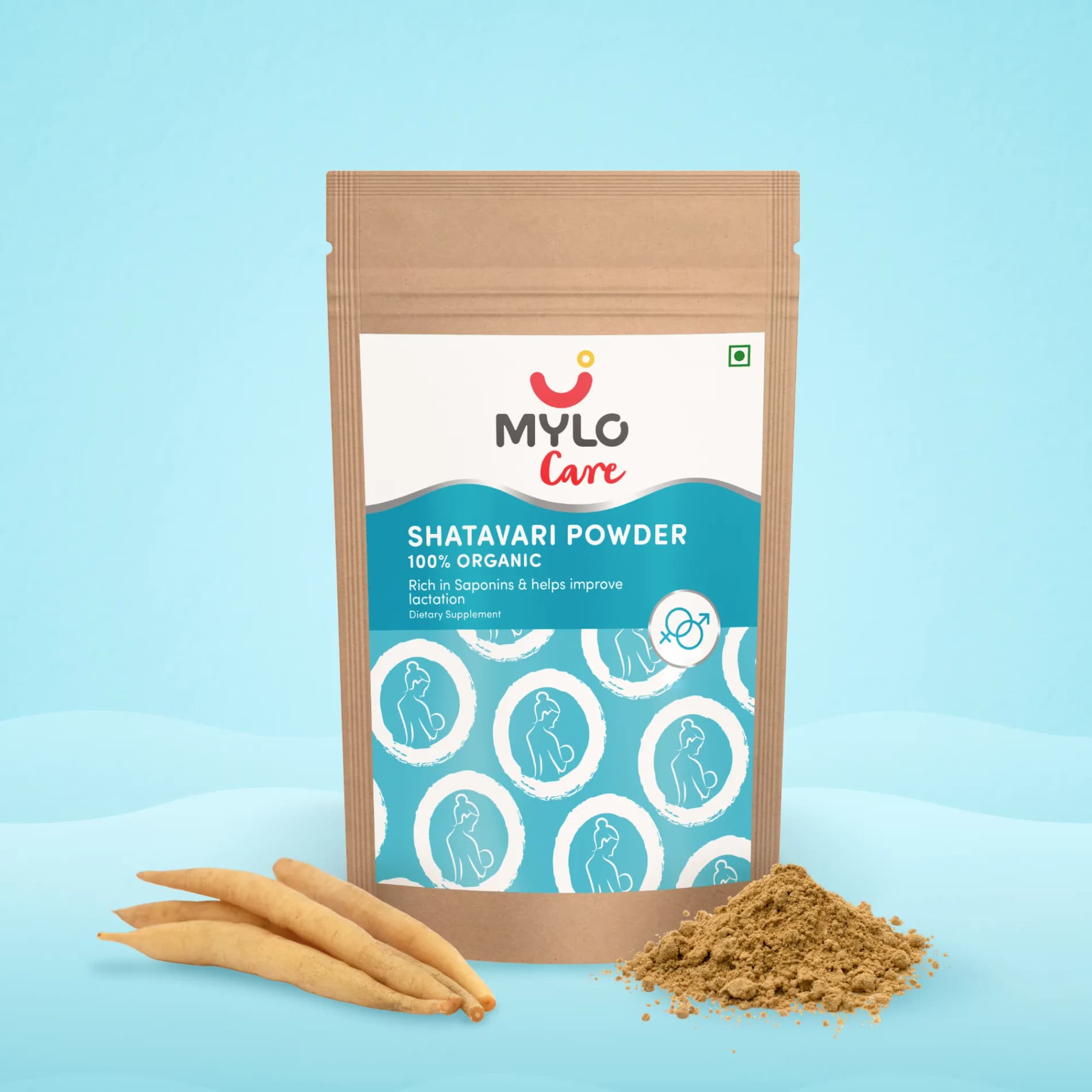
Shatavari Powder - 100 gm
Improves Lactation | Promotes Hormonal Balance | Relieves Stress & Anxiety | Clinically Tested


Article Posted Under
Related Articles


Medical Disclaimer
This content is for informational purposes only and should not replace professional medical advice. Consult with a physician or other health care professional if you have any concerns or questions about your health. If you rely on the information provided here, you do so solely at your own risk.


AWARDS AND RECOGNITION

Mylo wins Forbes D2C Disruptor award

Mylo wins The Economic Times Promising Brands 2022
AS SEEN IN













- Mylo Care: Effective and science-backed personal care and wellness solutions for a joyful you.
- Mylo Baby: Science-backed, gentle and effective personal care & hygiene range for your little one.
- Mylo Community: Trusted and empathetic community of 10mn+ parents and experts.


Product Categories
Baby Carrier | Baby Soap | Baby Wipes | Stretch Marks Cream | Baby Cream | Baby Shampoo | Baby Massage Oil | Baby Hair Oil | Stretch Marks Oil | Baby Body Wash | Baby Powder | Baby Lotion | Diaper Rash Cream | Newborn Diapers | Teether | Baby Kajal | Baby Diapers Pants | Cloth Diapers | Laundry Detergent | Lactation Granules |