


Orders
.png&w=48&q=75 "login")
Profile


Wallet

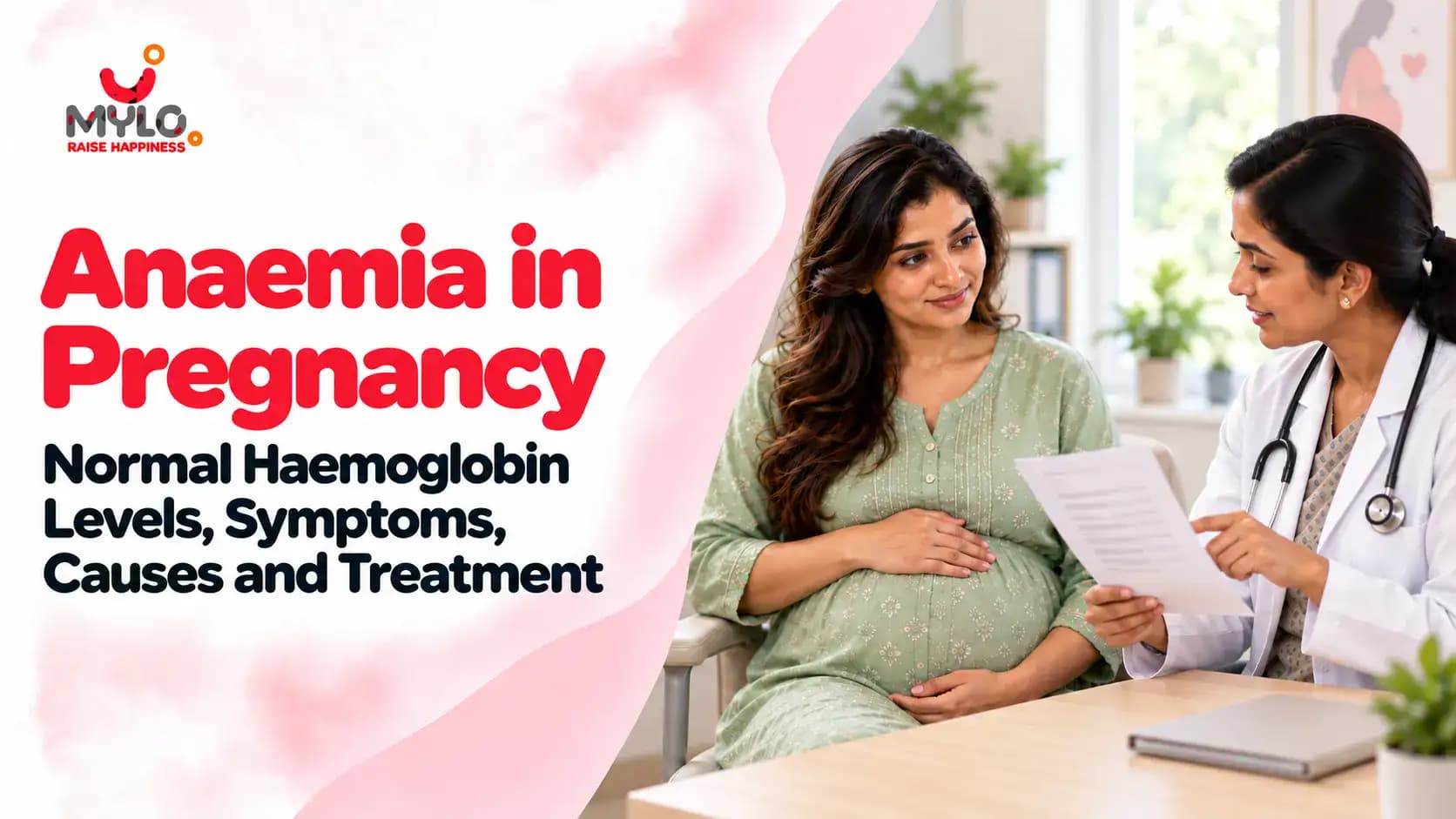
Anaemia in Pregnancy: Normal Haemoglobin Levels, Symptoms, Causes and Treatment
 19 Likes|
 13 min
Quick Answer
Anaemia in pregnancy means your haemoglobin (Hb) is too low to carry enough oxygen, defined by the WHO as below 11 g/dL in the first and third trimesters, and below 10.5 g/dL in the second. It is extremely common in India, affecting around half of pregnant women, and is most often caused by iron deficiency. It is both preventable and treatable, usually with iron-folic acid tablets and an iron-rich diet, and sometimes with an iron infusion.
Key Takeaways
Anaemia is defined by a number. Below 11 g/dL (first and third trimester) or below 10.5 g/dL (second trimester) is anaemia, per the WHO 2024 thresholds.
It is very common in India. Around half of Indian pregnant women are anaemic, which is why the government provides iron-folic acid tablets routinely.
Iron deficiency is the main cause, but folate deficiency, vitamin B12 deficiency (common in vegetarians) and thalassaemia also matter in India.
Most cases are treatable with iron-folic acid tablets, dietary changes and, for moderate to severe cases, an iron infusion.
Severe anaemia is a genuine risk to mother and baby, linked to preterm birth, low birth weight and complications at delivery, so it should never be ignored.
What Is Anaemia in Pregnancy, and What Is a Normal Haemoglobin Level?
Anaemia is when the level of haemoglobin, the protein in red blood cells that carries oxygen, falls too low (WHO). In pregnancy, some drop in haemoglobin is normal, because your blood volume expands more than your red cells do, diluting the blood. But below a certain level it becomes anaemia that needs treatment.
Here are the WHO thresholds, updated in 2024 to reflect the trimester.
Stage | Haemoglobin below this = anaemia |
|---|---|
First trimester | 11.0 g/dL |
Second trimester | 10.5 g/dL |
Third trimester | 11.0 g/dL |
(WHO 2024 haemoglobin cutoffs.)
And here is how severity is graded, which decides your treatment:
Severity | Haemoglobin level |
|---|---|
Mild | 10.0 to 10.9 g/dL |
Moderate | 7.0 to 9.9 g/dL |
Severe | Below 7.0 g/dL |
So what is a "normal" Hb in pregnancy? Broadly, 11 g/dL or above is the target, and many doctors aim to keep you comfortably above the thresholds throughout. Your Hb is checked at your first (booking) visit and again around 28 weeks, and more often if you are anaemic.
How Common Is Anaemia in Pregnancy in India?
Very common, and this is important context. Globally, the WHO estimates about 37% of pregnant women are anaemic, and the WHO South-East Asia region, which includes India, is among the worst affected (WHO). In India specifically, national survey data (NFHS-5) put anaemia in pregnant women at around half.
This is why anaemia in pregnancy is treated as a public health priority in India, and why the government's Anaemia Mukt Bharat programme provides iron-folic acid tablets, testing and treatment through routine antenatal care. If you are pregnant in India, being screened and offered iron is standard, not a sign something is unusually wrong.
What Are the Symptoms of Anaemia in Pregnancy?
Mild anaemia often has no obvious symptoms, which is exactly why routine blood testing matters. As it becomes more significant, common symptoms include (WHO):
Tiredness and low energy beyond normal pregnancy fatigue
Dizziness or light-headedness
Shortness of breath, especially on exertion like climbing stairs
Cold hands and feet
Headache
Pale skin, and paleness inside the lower eyelids, lips and nails
Fast or pounding heartbeat
More serious signs that need prompt attention include a rapid heartbeat at rest, breathlessness with little effort, fainting, or chest discomfort. Some women also notice unusual cravings for non-food items like ice or mud (called pica), which can be linked to iron deficiency and is worth mentioning to your doctor.
What Causes Anaemia in Pregnancy?
Pregnancy increases your iron needs sharply, because you are building your baby's blood supply as well as your own expanded volume. The main causes, in the Indian context, are:
Cause | Why it matters in India |
|---|---|
Iron deficiency | By far the most common cause. Common because of largely vegetarian diets, where iron is less easily absorbed |
Folate (folic acid) deficiency | Needed to make red blood cells. Covered by your folic acid supplement |
Vitamin B12 deficiency | Common in vegetarians and vegans, and not in the standard government tablet |
Thalassaemia and other inherited conditions | Significant in India. A cause of anaemia that iron will not fix, and a reason for thalassaemia testing |
Blood loss | Heavy periods before pregnancy, or bleeding conditions |
Frequent or closely spaced pregnancies | Iron stores do not recover between pregnancies |
Infections | Including hookworm and malaria in some regions |
The single most important distinction your doctor makes is whether it is iron deficiency (the common, treatable type) or something else like thalassaemia, because giving iron for thalassaemia does not help and can cause iron overload. This is why your doctor may order more than just a haemoglobin test.
How Is Anaemia Diagnosed in Pregnancy?
Haemoglobin (Hb) test: the basic screen, done at booking and around 28 weeks.
Complete blood count (CBC): shows the size of your red cells, which hints at the cause (small cells suggest iron deficiency or thalassaemia).
Ferritin: measures your iron stores, the most useful test for confirming iron deficiency.
Further tests such as vitamin B12, folate, or haemoglobin electrophoresis (for thalassaemia) if the picture is not straightforward.
If your anaemia does not improve with iron as expected, that itself is a clue that the cause may not be simple iron deficiency, and your doctor will investigate further.
How Is Anaemia in Pregnancy Treated?
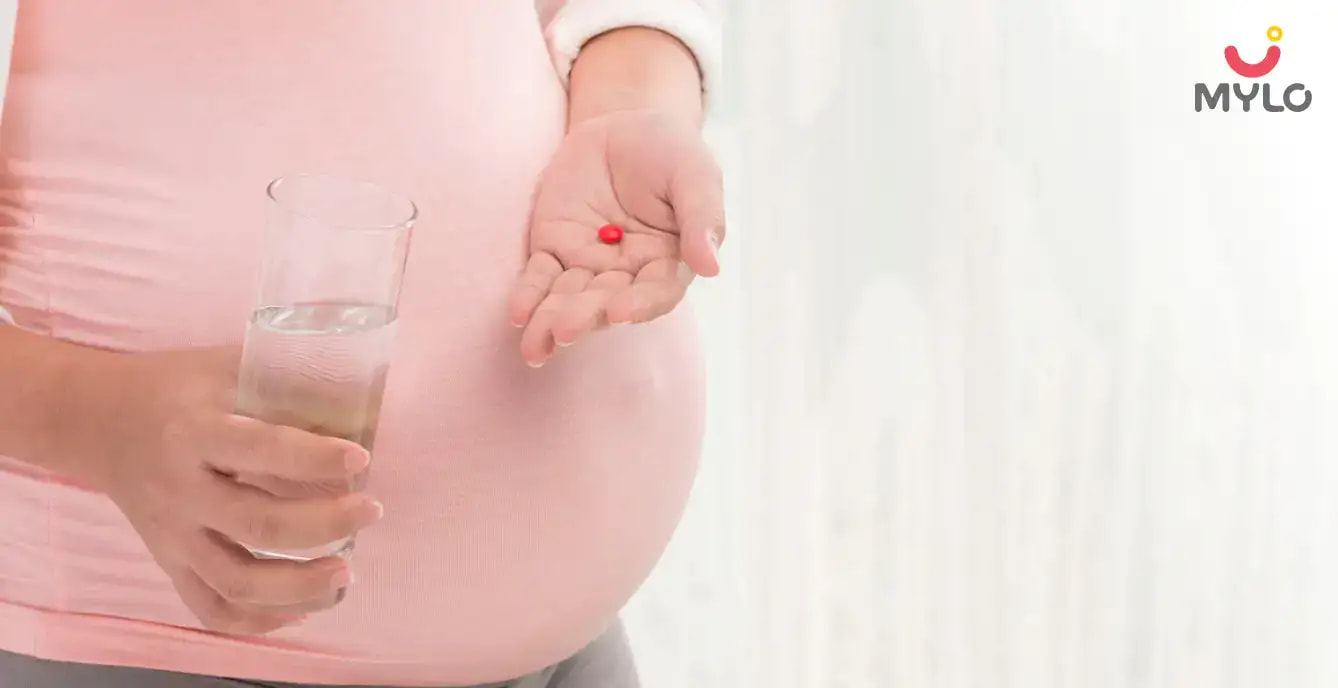
Treatment depends on the cause and severity. For the common iron-deficiency type:
1. Iron-folic acid (IFA) tablets. The first-line treatment, provided free through Indian antenatal care. The WHO recommends daily iron and folic acid in pregnancy (WHO guideline). To get the most from your tablet:
Take it with a vitamin C source (lemon, orange, amla, tomato), which boosts iron absorption.
Avoid taking it with tea, coffee or milk, which reduce absorption. Keep them at least an hour away.
Take calcium tablets at a different time, as calcium competes with iron.
Expect some constipation or dark stools; more water, fibre and fruit help, and dark stools are harmless.
2. Dietary iron. Alongside tablets, not instead of them. Good vegetarian sources include dark green leafy vegetables (palak, bathua), dals and legumes, bajra and ragi, jaggery, dates, sesame (til), and dried fruit. Pairing these with vitamin C foods improves absorption. See how to increase haemoglobin naturally in pregnancy.
3. Intravenous (IV) iron. For moderate to severe anaemia, or when tablets are not tolerated or not working, an iron infusion raises levels faster and is commonly used in later pregnancy.
4. Blood transfusion. Reserved for severe anaemia, especially near delivery or with active bleeding.
5. Treating the specific cause. B12 or folate supplements if those are deficient, and specialist care for thalassaemia, which iron will not treat.
Why Does Anaemia in Pregnancy Matter? The Risks
Untreated moderate to severe anaemia is not a minor issue. It is linked to:
Greater risk of heavy bleeding at delivery (postpartum haemorrhage), because you have less reserve to cope with blood loss
Tiredness and reduced ability to cope with labour and recovery
Increased risk of infection after birth
In severe cases, strain on the heart
The reassuring flip side: anaemia is preventable and highly treatable, and catching it through routine testing means most of these risks can be avoided. This is the whole reason for the blood tests and the iron tablets.
Mylo Parents Asked
"What is a normal haemoglobin level in pregnancy?"
Broadly, 11 g/dL or above is the target. Anaemia is diagnosed below 11 g/dL in the first and third trimesters, and below 10.5 g/dL in the second trimester (WHO 2024). Your doctor tracks your Hb at booking and around 28 weeks, and more often if it is low.
"How much haemoglobin is required for a normal delivery?"
There is no single legal cut-off, but doctors generally prefer your Hb to be comfortably above the anaemia threshold (around 11 g/dL) going into delivery, because higher reserves help you cope with the normal blood loss of birth. Moderate or severe anaemia near your due date is treated actively, sometimes with an iron infusion, to reduce delivery risks. Being mildly anaemic does not automatically prevent a normal delivery, but your doctor will manage it.
"My haemoglobin is 9. Is that dangerous?"
An Hb of 9 g/dL is moderate anaemia and needs proper treatment, but it is common and treatable. Your doctor will likely review your iron tablets, may check your iron stores and the cause, and may consider an iron infusion depending on how far along you are. Take it seriously, follow the treatment, and it can usually be corrected before delivery.
"I am taking iron tablets but my Hb is not improving. Why?"
A few reasons are possible: the tablet is not being absorbed well (are you taking it with tea, coffee or milk?), you are not tolerating it and missing doses, or the cause is not simple iron deficiency, for example thalassaemia or B12 deficiency, which iron will not fix. Tell your doctor, who may change the approach or test further.
"I am vegetarian. Am I more likely to get anaemia?"
Somewhat, because plant (non-heme) iron is absorbed less efficiently than iron from meat, and vitamin B12, which also affects blood formation, is low in many Indian vegetarians. It is very manageable: take your iron tablet with vitamin C, eat iron-rich vegetarian foods, and ask your doctor about B12. See the vegetarian pregnancy diet guide.
"Can I increase my haemoglobin quickly with food alone?"
Diet helps and matters, but food alone usually cannot correct established anaemia as fast as needed in pregnancy, which is why tablets or, for lower levels, an infusion are used. Think of iron-rich food as essential support to your treatment, not a replacement for it.
"Which foods should I eat, and which drinks should I avoid?"
Eat dark leafy greens, dals, bajra, ragi, jaggery, dates, sesame and dried fruit, paired with a vitamin C source like lemon or amla. Avoid tea and coffee around meals and around your iron tablet, because they block iron absorption.
When To Seek Medical Help
Contact your doctor if you have:
Increasing tiredness, breathlessness on mild activity, or dizziness
A fast or pounding heartbeat, or fainting
A haemoglobin result your doctor has flagged as low
Iron tablets that you cannot tolerate, or that are not improving your levels
Seek urgent care for severe breathlessness, chest pain, fainting, or any heavy bleeding, which need immediate attention.
This article is for information only and does not replace your obstetrician's advice, which is based on your actual blood results.
Bottom Line
Anaemia in pregnancy is defined by a haemoglobin below 11 g/dL (10.5 in the second trimester), it affects around half of pregnant women in India, and it is usually caused by iron deficiency. It matters, because moderate to severe anaemia raises the risk of preterm birth, low birth weight and bleeding at delivery. The good news is that it is one of the most treatable conditions in pregnancy: take your iron-folic acid tablets correctly, pair iron-rich food with vitamin C, keep tea and coffee away from meals, and follow up on your blood tests. If iron is not improving your levels, tell your doctor, because the cause may need a different treatment.
References
All links verified live on 16 September 2026.
Anaemia fact sheet — World Health Organization (updated February 2025). Source for the definition, global prevalence (37% of pregnant women), symptoms and causes.
WHO 2024 guideline on haemoglobin cutoffs to define anaemia — World Health Organization. Source for the trimester-specific thresholds (11.0 g/dL first and third, 10.5 g/dL second) and the mild/moderate/severe grading. (Team: link to the WHO 2024 guideline page or its IRIS PDF once confirmed in the CMS.)
Guideline: Daily iron and folic acid supplementation in pregnant women — World Health Organization. Source for the IFA supplementation recommendation.
National Family Health Survey (NFHS-5), 2019 to 2021 — Ministry of Health and Family Welfare, Government of India. Source for the Indian anaemia prevalence figure. (Team: confirm the exact NFHS-5 pregnant-women percentage before publishing; it is close to half.)
Article Posted Under
Related Articles
Related Topics
.webp&w=32&q=75)
Medical Disclaimer
This content is for informational purposes only and should not replace professional medical advice. Consult with a physician or other health care professional if you have any concerns or questions about your health. If you rely on the information provided here, you do so solely at your own risk.


AWARDS AND RECOGNITION

Mylo wins Forbes D2C Disruptor award

Mylo wins The Economic Times Promising Brands 2022
AS SEEN IN












- Mylo Care: Effective and science-backed personal care and wellness solutions for a joyful you.
- Mylo Baby: Science-backed, gentle and effective personal care & hygiene range for your little one.
- Mylo Community: Trusted and empathetic community of 10mn+ parents and experts.


Product Categories
Baby Carrier | Baby Soap | Baby Wipes | Stretch Marks Cream | Baby Cream | Baby Shampoo | Baby Massage Oil | Baby Hair Oil | Stretch Marks Oil | Baby Body Wash | Baby Powder | Baby Lotion | Diaper Rash Cream | Newborn Diapers | Teether | Baby Kajal | Baby Diapers Pants | Cloth Diapers | Laundry Detergent | Lactation Granules |