


Orders

Profile

Dalia (Broken Wheat) in Pregnancy: Benefits, Nutrition, Recipes and How to Eat (2026 Guide)
 89 Likes|
 15 min
AI-Generated Summary
Quick overview in 30 seconds.webp&w=32&q=75)
Summary
- Dalia, made from cracked wheat, is a nutrient powerhouse rich in fibre, manganese, complex carbs and protein, making it an ideal superfood during pregnancy for both mom and baby.
- Eating dalia in pregnancy helps with weight management, controls gestational diabetes, alleviates constipation, boosts hemoglobin, maintains cholesterol levels, and provides sustained energy throughout the day.
- Dalia supports your baby's growth with plant-based protein, prepares your body for lactation as a galactagogue, and is incredibly easy to cook on tired pregnancy days.
- Looking for nutritious pregnancy foods to support you and baby? Explore our MamaGro™ Protein Diskettes - High Protein & No Added Sugar - 250gm (50 Diskettes).
TL;DR
Dalia (broken wheat or cracked wheat) is a nutritious, easy-to-digest whole-grain superfood that is safe and highly beneficial during pregnancy. It is rich in complex carbohydrates, fibre, plant protein, B vitamins, iron and magnesium, and has a low glycemic index, which helps control blood sugar (useful in gestational diabetes), prevents constipation, supports healthy weight gain and provides steady energy (ICMR Dietary Guidelines) (Harvard School of Public Health, Whole Grains). You can eat it as sweet dalia (with milk) or savoury vegetable dalia (namkeen), ideally once a day as part of a balanced diet. It is one of the best pregnancy foods for Indian mothers because it is cheap, versatile and gentle on the stomach.
Quick Answer
Dalia (broken wheat) is a safe, nutritious whole grain for pregnancy. It is high in fibre, plant protein, iron and B vitamins, and its low glycemic index helps control blood sugar and prevent constipation. Eat it sweet with milk or savoury with vegetables, about once a day, as part of a balanced pregnancy diet.
Author: Priyanka Verma, Senior Nutrition Content Editor, Mylo Parenting Desk Medically reviewed by: Mylo Editorial Board, aligned with ICMR Dietary Guidelines for Indians, ACOG and FOGSI nutrition guidance Last updated: 11 June 2026
Medical Disclaimer: This article is for informational purposes only and is not a substitute for professional medical or dietary advice. If you have gluten intolerance, celiac disease, gestational diabetes or any dietary restriction, please consult your doctor or dietitian before making dalia a regular part of your diet.
Key Takeaways
- Dalia (broken wheat) is a safe, nutritious whole grain for pregnancy (ICMR)
- Rich in fibre, complex carbs, plant protein, iron, magnesium and B vitamins
- Low glycemic index helps control blood sugar (good for gestational diabetes) (Harvard Nutrition Source)
- High fibre prevents constipation, a common pregnancy complaint
- Supports healthy weight gain and provides steady energy
- Eat as sweet (milk) dalia or savoury vegetable dalia
- Best eaten once a day as part of a balanced diet
- Avoid if you have celiac disease or gluten intolerance (dalia contains gluten)
What Is Dalia?
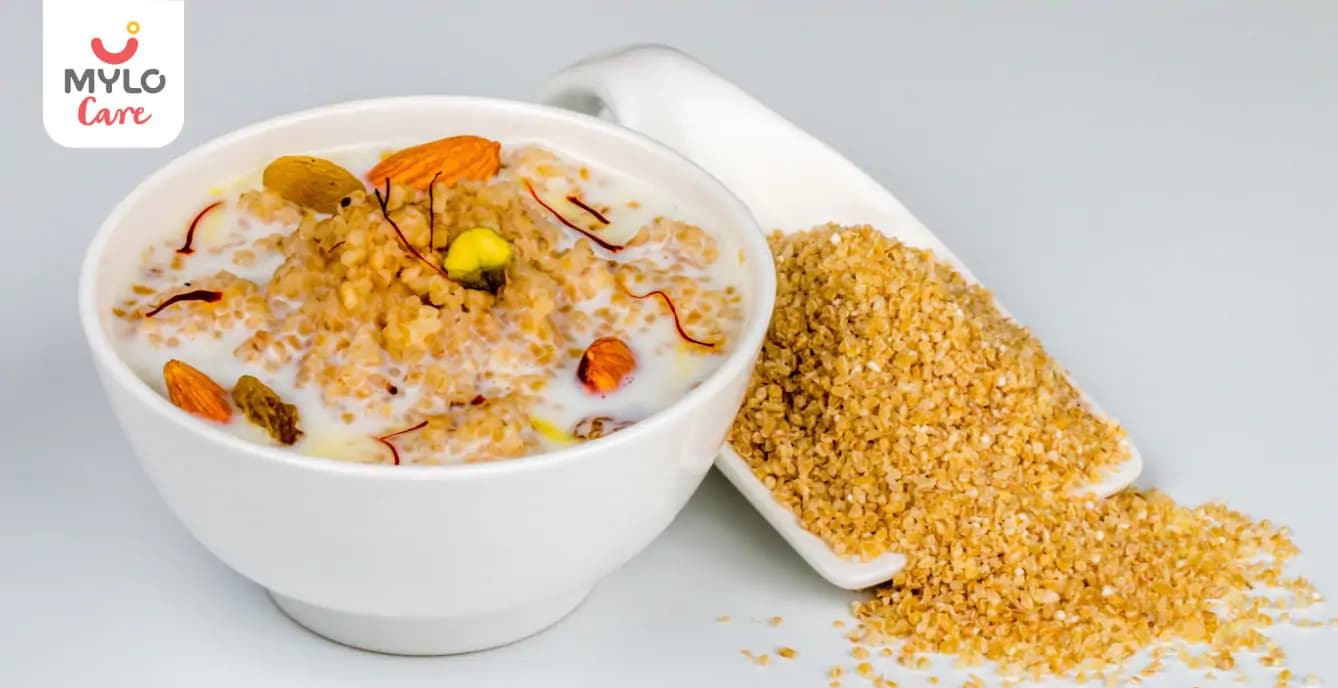
Dalia, also called broken wheat, cracked wheat or bulgur, is made by coarsely grinding whole wheat grains (Harvard Nutrition Source).
Because it is a whole grain (the bran, germ and endosperm are kept), dalia retains:
- Fibre
- B vitamins
- Iron and magnesium
- Plant protein
It has been a staple in Indian kitchens for centuries, eaten as a porridge, khichdi or upma. It is easy to cook, gentle on digestion and very affordable, making it ideal for pregnancy.
What Is the Nutritional Value of Dalia?
Approximate nutrition per 100 g of cooked dalia (USDA FoodData Central) (ICMR Nutritive Value of Indian Foods):
| Nutrient | Approx. Amount (per 100 g cooked) | Benefit in Pregnancy |
|---|---|---|
| Energy | About 120 to 150 kcal | Steady energy |
| Protein | About 4 to 5 g | Supports baby's growth |
| Carbohydrates | About 26 to 28 g | Complex carbs for sustained fuel |
| Fibre | About 4 to 5 g (when whole) | Prevents constipation |
| Iron | Moderate | Supports haemoglobin |
| Magnesium | Moderate | Muscle and nerve function |
| B vitamins | Present | Energy metabolism |
| Glycemic index | Low to medium | Helps control blood sugar |
Exact values vary by brand and how it is cooked. Cooking with milk, vegetables or ghee changes the final nutrition.
What Are the Benefits of Eating Dalia During Pregnancy?
1. Helps Manage Healthy Weight Gain
Dalia is filling and low in calorie density, helping you feel full without overeating, supporting steady, healthy pregnancy weight gain (ICMR).
2. Supports Blood Sugar Control (Good for Gestational Diabetes)
Its low glycemic index releases sugar slowly, helping avoid blood sugar spikes, valuable for women with or at risk of gestational diabetes (Harvard Nutrition Source).
3. Prevents and Relieves Constipation
The high fibre content adds bulk and eases bowel movements, helping with pregnancy constipation and bloating (NHS Constipation).
4. Supports Haemoglobin and Reduces Anaemia Risk
Dalia provides iron, which (alongside iron-rich foods and doctor-advised supplements) supports healthy haemoglobin, important given high anaemia rates in Indian women (ICMR).
5. Provides Steady, Lasting Energy
Complex carbohydrates release energy slowly, helping fight pregnancy fatigue without sugar crashes.
6. Supports the Baby's Growth
The plant protein and micronutrients contribute to your baby's development as part of a balanced diet (ACOG Nutrition).
7. Easy to Digest and Gentle on the Stomach
Soft, porridge-like dalia is easy to digest, helpful during nausea, indigestion or low appetite.
8. Supports Heart Health
Whole grains like dalia can help maintain healthy cholesterol levels as part of a balanced diet (Harvard Nutrition Source).
9. Quick and Convenient to Cook
Dalia cooks in about 15 to 20 minutes, ideal when pregnancy fatigue makes elaborate cooking difficult.
10. Versatile (Sweet or Savoury)
You can make it sweet with milk and jaggery or savoury with vegetables and spices, keeping meals interesting.
Note on lactation: Dalia is a nourishing food that supports overall nutrition for breastfeeding later, but no single food is a guaranteed "milk booster". A balanced diet and good hydration matter most.
Sweet Dalia vs Savoury Dalia: Which Is Better in Pregnancy?
Both are healthy; the choice depends on your taste and needs (ICMR):
| Feature | Sweet Dalia (Milk) | Savoury Dalia (Vegetable/Namkeen) |
|---|---|---|
| Main ingredients | Dalia, milk, jaggery/dates | Dalia, vegetables, mild spices |
| Best for | Calcium, breakfast, energy | Fibre, vegetables, lunch/dinner |
| Blood sugar | Use jaggery/dates in moderation | Lower sugar, GDM-friendly |
| Calcium | Higher (from milk) | Lower (unless curd added) |
| Iron and veggies | Lower | Higher (with palak, carrots, peas) |
| Good for GDM | In moderation, limit sweetener | Yes, a great choice |
For gestational diabetes, savoury vegetable dalia is the better pick, and use minimal jaggery if making the sweet version (FOGSI).
How Much Dalia Can You Eat During Pregnancy?
| Aspect | Guidance |
|---|---|
| Frequency | Once a day is a healthy amount |
| Portion | About 1 bowl (cooked) per serving |
| Best meals | Breakfast (sweet) or lunch/dinner (savoury) |
| Variety | Rotate with other grains (oats, ragi, jowar, rice, roti) |
| For GDM | Prefer savoury; pair with protein and vegetables |
Dalia is healthy, but variety is key. Rotate it with other whole grains and foods so you get a wide range of nutrients (ICMR).
Easy Dalia Recipes for Pregnancy
1. Sweet Milk Dalia (Breakfast)
Ingredients: Dalia, milk, water, jaggery or dates, a few chopped nuts, cardamom (elaichi)
Method:
- Dry roast dalia lightly for aroma
- Pressure cook with water until soft
- Add warm milk and stir
- Sweeten with jaggery or mashed dates (avoid excess sugar)
- Add chopped almonds, walnuts and a pinch of cardamom
A great iron-and-calcium breakfast. For GDM, limit the sweetener.
2. Vegetable Dalia Khichdi (Lunch/Dinner)
Ingredients: Dalia, moong dal, mixed vegetables (carrot, peas, beans, palak), cumin (jeera), turmeric (haldi), mild spices
Method:
- Heat a little ghee, add jeera and haldi
- Add chopped vegetables and saute
- Add dalia and moong dal, mix
- Pressure cook with water until soft
- Season mildly; serve warm with curd (dahi)
A complete one-bowl meal: carbs, protein, fibre and vegetables together.
3. Dalia Upma (Quick Snack)
Ingredients: Roasted dalia, onion, carrot, peas, curry leaves, mustard seeds, mild spices
Method:
- Temper mustard seeds and curry leaves in a little oil
- Add vegetables and saute
- Add roasted dalia and water
- Cook until soft and fluffy
- Garnish with coriander and a squeeze of lemon
4. Dalia with Curd (Cooling Option)
Mix cooked, cooled dalia with fresh curd (dahi), a little salt and roasted jeera, a light, gut-friendly, probiotic-rich option for hot days.
When Is the Best Time to Eat Dalia in Pregnancy?
| Time | Type | Why |
|---|---|---|
| Breakfast | Sweet milk dalia | Energy and calcium to start the day |
| Lunch | Vegetable dalia khichdi | Balanced, filling, fibre-rich |
| Evening snack | Dalia upma | Light, satisfying |
| Dinner | Light savoury dalia | Easy to digest before bed |
Dalia is gentle enough to eat at any meal. Many women prefer it at breakfast or dinner because it is light and easy to digest.
What Are the Side Effects and Precautions?
Dalia is safe for most, but keep these in mind (NHS Foods to Avoid):
- Gluten content: Dalia is made from wheat and contains gluten. Women with celiac disease or gluten intolerance must avoid it and choose gluten-free grains like ragi, jowar or bajra instead
- Too much fibre at once: Adding large amounts of fibre suddenly can cause gas or bloating; increase gradually and drink enough water
- Portion control in GDM: Even healthy carbs affect blood sugar; portion size matters in gestational diabetes
- Added sugar/ghee: Sweet dalia with lots of sugar or heavy ghee adds extra calories; keep it moderate
- Hydration: Fibre works best with adequate water (2.5 to 3 litres daily)
Indian Context: Why Dalia Is Ideal for Indian Mothers
- Affordable superfood: Dalia is inexpensive (INR 40 to INR 80 per kg) and available in every Indian grocery store
- Helps with common deficiencies: Provides iron and B vitamins, helpful given high anaemia rates in Indian women (ICMR)
- Vegetarian-friendly protein: A good plant protein source for India's many vegetarian mothers
- Gentle for nausea: Soft, bland sweet dalia is soothing during first-trimester morning sickness
- GDM-friendly: Gestational diabetes is common in Indian women; savoury dalia is a smart low-GI carb choice (FOGSI)
- Versatile across regions: Works as upma (South), khichdi (North), or porridge, suits all Indian palates
- Easy on a budget and time: Quick to cook, perfect for busy or tired expecting mothers
Myths vs Facts About Dalia in Pregnancy
| Myth | Fact | Source |
|---|---|---|
| "Dalia is just for sick people or babies" | False. It is a nutritious whole grain for everyone, including pregnant women | ICMR |
| "Eating dalia daily causes weight gain" | False. Its fibre helps manage healthy weight | Harvard Nutrition Source |
| "Dalia is unsafe in gestational diabetes" | False. Its low GI makes it a good choice (in portions) | Harvard Nutrition Source |
| "Dalia has no protein" | False. It provides useful plant protein | USDA |
| "Everyone can eat dalia safely" | False. Those with celiac disease/gluten intolerance must avoid it | NHS |
| "Sweet dalia is unhealthy" | Partly false. It is healthy if you limit sugar and use jaggery/dates in moderation | ICMR |
| "Dalia alone is a complete diet" | False. It must be part of a varied, balanced diet | ACOG |
FAQs: Dalia in Pregnancy
Is dalia good during pregnancy?
Yes. Dalia (broken wheat) is a nutritious whole grain rich in fibre, plant protein, iron and B vitamins, with a low glycemic index (ICMR). It supports healthy weight gain, blood sugar control, digestion and energy, making it an excellent pregnancy food (unless you have gluten intolerance).
Pregnancy mein dalia khana chahiye? (Hinglish)
Haan, pregnancy mein dalia (broken wheat) khana bahut faydemand hai. Ismein fibre, plant protein, iron aur B vitamins hote hain, aur iska glycemic index low hota hai jo blood sugar control mein madad karta hai. Ye constipation se bachata hai, energy deta hai aur digest karne mein aasan hai. Sweet (doodh ke saath) ya namkeen (sabzi ke saath) dono tarah kha sakti hain. Sirf gluten intolerance ho toh avoid karein.
Can I eat dalia every day during pregnancy?
Yes, once a day is healthy. However, rotate it with other whole grains like oats, ragi, jowar and rice so you get a variety of nutrients (ICMR). Variety is important in a balanced pregnancy diet.
Is dalia good for gestational diabetes?
Yes, dalia has a low glycemic index, which helps avoid blood sugar spikes (Harvard Nutrition Source). For gestational diabetes, prefer savoury vegetable dalia, watch portion sizes, and pair it with protein and vegetables. Limit jaggery or sugar in the sweet version.
Is sweet dalia or namkeen dalia better in pregnancy?
Both are healthy. Sweet milk dalia gives more calcium and is great for breakfast; savoury vegetable dalia is higher in fibre and vegetables and better for gestational diabetes (ICMR). Choose based on your taste and health needs.
Pregnancy mein dalia kab khana chahiye? (Hinglish)
Dalia kisi bhi meal mein kha sakti hain:
- Breakfast: Sweet milk dalia (energy aur calcium ke liye)
- Lunch: Vegetable dalia khichdi (balanced meal)
- Evening: Dalia upma (light snack)
- Dinner: Halka namkeen dalia (easy to digest) Subah ya raat ko khana zyada popular hai kyunki ye light aur easily digestible hai.
Does dalia help with constipation in pregnancy?
Yes. Dalia is high in fibre, which adds bulk to stool and eases bowel movements, helping relieve pregnancy constipation (NHS). Drink plenty of water alongside for best results.
Can dalia cause gas or bloating?
Sometimes, if you eat too much too quickly. Dalia's fibre is healthy, but a sudden large increase can cause gas or bloating (NHS). Increase your portions gradually and drink enough water to let your gut adjust.
Is dalia safe in the first trimester?
Yes. In fact, soft sweet dalia is gentle and soothing during first-trimester nausea and low appetite (ICMR). It is easy to digest and provides steady energy when you may not feel like eating much.
Who should avoid dalia in pregnancy?
Women with celiac disease or gluten intolerance should avoid dalia, as it is made from wheat and contains gluten (NHS Celiac). They can choose gluten-free whole grains like ragi, jowar, bajra or rice instead.
Is dalia better than oats in pregnancy?
Both are excellent whole grains. Dalia (wheat-based) and oats both offer fibre and steady energy. Oats are gluten-free-friendly (if certified) and slightly higher in soluble fibre, while dalia is cheaper and a great Indian staple. The best approach is to rotate both for variety (Harvard Nutrition Source).
Can dalia help with weight management in pregnancy?
Yes. Dalia is filling and relatively low in calorie density, so it helps you feel satisfied and supports healthy, steady weight gain rather than excess (ICMR). Keep portions and added sugar/ghee moderate.
Does dalia provide enough protein for pregnancy?
Dalia provides useful plant protein (about 4 to 5 g per 100 g cooked), but it is not a complete protein on its own (USDA). Pair it with moong dal, curd, milk or vegetables to boost the protein quality of your meal.
References
- ICMR / NIN. "Dietary Guidelines for Indians." https://www.nin.res.in/dietaryguidelines/pdfjs/locale/DGI07052024P.pdf
- Harvard T.H. Chan School of Public Health. "Whole Grains." https://www.hsph.harvard.edu/nutritionsource/what-should-you-eat/whole-grains/
- Harvard T.H. Chan School of Public Health. "Carbohydrates and Blood Sugar." https://www.hsph.harvard.edu/nutritionsource/carbohydrates/carbohydrates-and-blood-sugar/
- American College of Obstetricians and Gynecologists (ACOG). "Nutrition During Pregnancy." https://www.acog.org/womens-health/faqs/nutrition-during-pregnancy
- NHS UK. "Constipation in Pregnancy." https://www.nhs.uk/conditions/pregnancy-and-baby/constipation-and-soiling/
- NHS UK. "Coeliac Disease." https://www.nhs.uk/conditions/coeliac-disease/
- NHS UK. "Foods to Avoid in Pregnancy." https://www.nhs.uk/pregnancy/keeping-well/foods-to-avoid/
- USDA FoodData Central. "Bulgur, Cooked." https://fdc.nal.usda.gov/
- ICMR (Indian Council of Medical Research). https://www.icmr.gov.in/
- FOGSI (Federation of Obstetric and Gynaecological Societies of India). https://www.fogsi.org/
Related Articles
Related Topics
.webp&w=32&q=75)
Medical Disclaimer
This content is for informational purposes only and should not replace professional medical advice. Consult with a physician or other health care professional if you have any concerns or questions about your health. If you rely on the information provided here, you do so solely at your own risk.


AWARDS AND RECOGNITION

Mylo wins Forbes D2C Disruptor award

Mylo wins The Economic Times Promising Brands 2022
AS SEEN IN












- Mylo Care: Effective and science-backed personal care and wellness solutions for a joyful you.
- Mylo Baby: Science-backed, gentle and effective personal care & hygiene range for your little one.
- Mylo Community: Trusted and empathetic community of 10mn+ parents and experts.


Product Categories
Baby Carrier | Baby Soap | Baby Wipes | Stretch Marks Cream | Baby Cream | Baby Shampoo | Baby Massage Oil | Baby Hair Oil | Stretch Marks Oil | Baby Body Wash | Baby Powder | Baby Lotion | Diaper Rash Cream | Newborn Diapers | Teether | Baby Kajal | Baby Diapers Pants | Cloth Diapers | Laundry Detergent | Lactation Granules |