


Orders
.png&w=48&q=75 "login")
Profile


Wallet

30+ Green Vegetables Names for Kids: A-Z Guide With Hindi, Tamil and Bengali (2026)
 15 min
Key Takeaways
Quick overview in 30 seconds.webp&w=32&q=75)
Summary
- Green vegetables like peas, broccoli, okra, bottle gourd, and zucchini are packed with fiber, vitamins, and antioxidants that support children's healthy growth and development.
- Leafy vegetables such as spinach, kale, fenugreek (methi), mustard greens, and cabbage are rich in iron, calcium, and vitamins A, C, and K for growing kids.
- Make learning green vegetable names fun through games, flashcards, gardening, cooking together, storytime, farmer's market visits, taste testing, and creative art activities.
- Looking for healthy nutrition support for your little one? Explore our Baby Wellness Kit | Skincare Gift Set for Newborns.
TL;DR
Indian kids should learn at least 30 green vegetables names by age 6: 12 staple Indian green sabzis (palak, methi, lauki, karela, bhindi, sahjan), 8 leafy greens (palak, methi, sarson, bathua, chaulai), 6 global vegetables (broccoli, lettuce, zucchini, asparagus, kale, brussels sprouts) and 5 seasonal regional picks (turai, parwal, kundru, tinda, drumstick). The fastest way to teach veggie names to Indian kids is the bilingual approach: pair English names with their Hindi names (palak = spinach, methi = fenugreek), use Devanagari flashcards, cook one new veggie a week, and turn sabzi time into a guessing game.
Quick Answer
Common green vegetables for Indian kids include palak (spinach), methi (fenugreek), lauki (bottle gourd), karela (bitter gourd), bhindi (okra), sahjan (drumstick), broccoli, cucumber (kheera), peas (matar), zucchini, kale and lettuce. Teach Indian children both the English name and the regional name (Hindi, Marathi, Tamil, Bengali) so they recognise the vegetable at home, in school books and at the sabziwala alike.
Author: Anupama Chadha, Senior Content Editor, Mylo Parenting Desk
Nutritionally reviewed by: Mylo Editorial Board (aligned with ICMR Dietary Guidelines for Indian Children)
Last updated: 2 June 2026
Key Takeaways
- Indian kids should know at least 30 green vegetables by primary school
- Bilingual learning works best: English name + Hindi/regional name in one go
- Palak (spinach), methi (fenugreek), lauki (bottle gourd) are the top 3 staple Indian green sabzis to start with
- ICMR recommends 300 grams of vegetables per day for kids aged 4 to 9, half of which should be green leafy
- Visual learning (flashcards, garden walks, sabziwala visits) beats rote memorisation
- Hindi names on packaged Indian veggie items make grocery shopping a learning moment
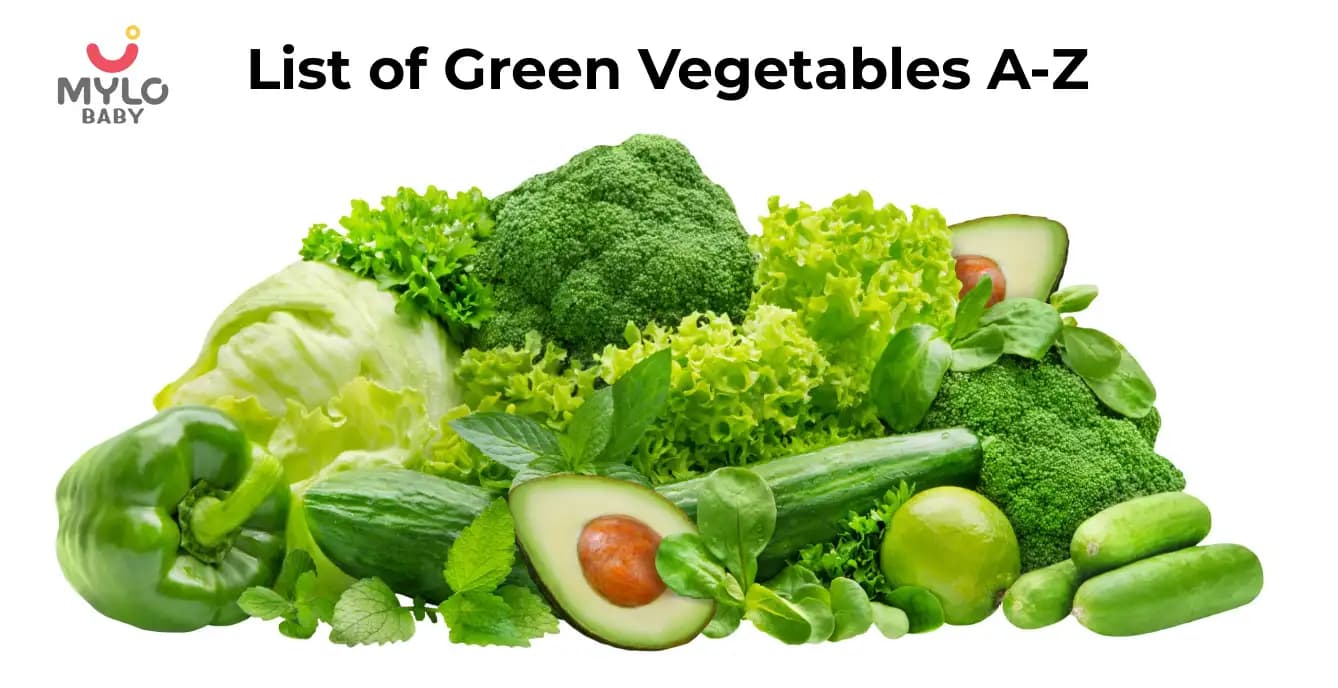
What Are Green Vegetables? (Simple Answer for Kids)
Green vegetables are edible plant parts (leaves, fruits, pods, stems, flowers) that are naturally green in colour due to chlorophyll. They are divided into two big groups:
- Green vegetables (e.g., bhindi, lauki, karela, broccoli, peas)
- Leafy green vegetables or saag (e.g., palak, methi, sarson, bathua)
Both groups are rich in vitamins A, C, K, folate, iron, fiber and antioxidants, all essential for a growing Indian child's brain development, immunity and bone strength.
Complete Bilingual Green Vegetables List (English + Hindi + Devanagari)
Staple Indian Green Sabzis (Vegetables)
| English Name | Hindi Name | Devanagari | Best Dish for Kids |
|---|---|---|---|
| Spinach | Palak | पालक | Palak paneer, palak puri |
| Fenugreek Leaves | Methi | मेथी | Methi paratha, methi thepla |
| Bottle Gourd | Lauki / Ghiya | लौकी | Lauki kofta, lauki halwa |
| Bitter Gourd | Karela | करेला | Stuffed karela (small portion) |
| Okra / Lady Finger | Bhindi | भिंडी | Bhindi do pyaza, kurkuri bhindi |
| Drumstick | Sahjan / Munaga | सहजन | South Indian sambar, drumstick curry |
| Ridge Gourd | Turai / Tori | तुरई | Turai sabzi, turai pakora |
| Pointed Gourd | Parwal | परवल | Parwal sabzi, parwal aloo |
| Ivy Gourd | Kundru / Tindora | कुंदरू | Kundru fry, Andhra style |
| Apple Gourd | Tinda | टिंडा | Tinda masala curry |
| Snake Gourd | Chichinda | चिचिंडा | Chichinda sabzi |
| Cluster Beans | Gawar / Guar | ग्वार | Gawar phali sabzi |
| Sponge Gourd | Nenua / Gilki | नेनुआ | Nenua bhaji |
| Field Beans | Sem | सेम | Sem ki sabzi |
| Cucumber | Kheera | खीरा | Salad, raita, kheere ka raita |
| Capsicum (Green) | Shimla Mirch | शिमला मिर्च | Stuffed shimla mirch, sabzi |
| Peas | Matar | मटर | Matar paneer, aloo matar |
| Green Chilli | Hari Mirch | हरी मिर्च | Garnish (in tiny amounts) |
| French Beans | Frans Bean | फ्रांस बीन | Beans poriyal, beans aloo |
| Broad Beans | Sem Phali | सेम फली | Sem phali sabzi |
| Brussels Sprouts | Choti Bandh Gobhi | छोटी बंद गोभी | Roasted, steamed |
| Broccoli | Hari Gobhi | हरी गोभी | Broccoli aloo, soup |
| Zucchini | Zucchini / Vilayati Lauki | ज़ुकीनी | Zucchini noodles, paratha |
| Asparagus | Shatavari | शतावरी | Stir-fry, soup |
| Avocado | Makhanphal | मक्खनफल | Mashed on toast, smoothie |
| Artichoke | Hathichak | हाथीचक | Steamed |
| Celery | Ajmoda | अजमोदा | Soup, salad |
Leafy Green Vegetables (Saag and Bhaaji)
| English Name | Hindi Name | Devanagari | Best Dish for Kids |
|---|---|---|---|
| Spinach | Palak | पालक | Palak paratha, palak khichdi |
| Fenugreek Leaves | Methi | मेथी | Methi thepla, methi paratha |
| Mustard Greens | Sarson | सरसों | Sarson da saag (Punjabi classic) |
| Amaranth Leaves | Chaulai / Lal Saag | चौलाई | Chaulai sabzi |
| Goosefoot Leaves | Bathua | बथुआ | Bathua paratha, bathua raita |
| Colocasia Leaves | Arbi Patta | अरबी पत्ता | Patra (Gujarati snack) |
| Radish Leaves | Mooli Patta | मूली पत्ता | Mooli leaf paratha |
| Cabbage | Patta Gobhi | पत्ता गोभी | Cabbage paratha, cabbage poriyal |
| Kale | Karam Saag | करम साग | Smoothie, chips |
| Lettuce | Salad Patta | सलाद पत्ता | Wraps, sandwiches |
| Drumstick Leaves | Moringa / Sahjan Patta | मोरिंगा | Soup, chutney, paratha |
| Coriander Leaves | Hara Dhaniya | हरा धनिया | Garnish, chutney |
| Mint Leaves | Pudina | पुदीना | Chutney, raita |
| Curry Leaves | Kadi Patta | कड़ी पत्ता | Tempering, chutney podi |
| Spring Onion Greens | Hara Pyaaz | हरा प्याज़ | Garnish, omelette |
| Dill Leaves | Soya Bhaji | सोया भाजी | Soya bhaji sabzi |
Green Vegetables Names in Indian Regional Languages
Help your child recognise green veggies wherever they live or visit family. Here are the top 10 picks across 8 major Indian languages.
Spinach (पालक)
Marathi: Palak, Bengali: Palong shaak, Tamil: Pasalai keerai, Telugu: Palakura, Kannada: Palak soppu, Malayalam: Cheera, Gujarati: Palak, Punjabi: Palak
Fenugreek Leaves (मेथी)
Marathi: Methi, Bengali: Methi shaak, Tamil: Vendhaya keerai, Telugu: Menthi koora, Kannada: Menthe soppu, Malayalam: Uluva ila, Gujarati: Methi bhaji, Punjabi: Methi
Bottle Gourd (लौकी)
Marathi: Dudhi bhopla, Bengali: Lau, Tamil: Sorakkai, Telugu: Sorakaya, Kannada: Sorekayi, Malayalam: Churakka, Gujarati: Dudhi, Punjabi: Ghiya / Lauki
Okra (भिंडी)
Marathi: Bhendi, Bengali: Dharosh, Tamil: Vendaikkai, Telugu: Bendakaya, Kannada: Bendekayi, Malayalam: Vendakka, Gujarati: Bhinda, Punjabi: Bhindi
Drumstick (सहजन)
Marathi: Shevga, Bengali: Sojne data, Tamil: Murungaikkai, Telugu: Munaga kaya, Kannada: Nuggekayi, Malayalam: Muringakka, Gujarati: Sargavo, Punjabi: Sahjan
Bitter Gourd (करेला)
Marathi: Karle, Bengali: Korola, Tamil: Pavakkai, Telugu: Kakara kaya, Kannada: Hagalakayi, Malayalam: Pavakka, Gujarati: Karela, Punjabi: Karela
Cucumber (खीरा)
Marathi: Kakdi, Bengali: Sosha, Tamil: Vellarikkai, Telugu: Dosakaya, Kannada: Southekayi, Malayalam: Vellarikka, Gujarati: Kakdi, Punjabi: Kheera
Peas (मटर)
Marathi: Matar, Bengali: Motorshuti, Tamil: Pattani, Telugu: Batanilu, Kannada: Batani, Malayalam: Pattani, Gujarati: Vatana, Punjabi: Matar
Capsicum (शिमला मिर्च)
Marathi: Dhobli mirchi / Shimla mirchi, Bengali: Capsicum, Tamil: Kudai milagai, Telugu: Capsicum, Kannada: Donne menasinakayi, Malayalam: Capsicum, Gujarati: Simla mirch, Punjabi: Shimla mirch
Mint Leaves (पुदीना)
Marathi: Pudina, Bengali: Pudina, Tamil: Pudina, Telugu: Pudina, Kannada: Pudina, Malayalam: Pudina, Gujarati: Phudino, Punjabi: Pudina
Nutritional Benefits: Why Indian Kids Need Green Veggies
ICMR (Indian Council of Medical Research) Dietary Guidelines recommend 300 grams of vegetables per day for children aged 4 to 9, with at least half from leafy greens. Green vegetables are essential because they provide:
| Nutrient | Found In | Helps With |
|---|---|---|
| Iron | Palak, methi, sarson, bathua | Prevents anaemia, common in Indian kids |
| Calcium | Drumstick leaves, methi, palak | Strong bones and teeth |
| Vitamin A | Spinach, broccoli, drumstick | Eye health, immunity |
| Vitamin C | Capsicum, broccoli, hara dhaniya | Immunity, iron absorption |
| Vitamin K | Kale, palak, parsley | Blood clotting, bone health |
| Folate | Lettuce, asparagus, palak | Brain development |
| Fiber | Bhindi, lauki, broccoli | Digestion, prevents constipation |
| Antioxidants | Karela, kale, broccoli | Cell protection, long-term health |
India-specific health context: Indian children have one of the world's highest rates of iron-deficiency anaemia (over 67% of under-5s, per NFHS-5). Daily palak, methi or sarson can meaningfully shift the needle.
Top 10 Easiest Green Vegetables for Picky Indian Eaters
Most Indian kids resist sabzi at first. These 10 are the easiest entry points.
- Lauki / Bottle Gourd: Mild, sweet; hide in halwa, kheer, paratha
- Cucumber / Kheera: Crunchy, hydrating; raita, salad, snack sticks
- Peas / Matar: Sweet, popular; matar paneer, pulao
- Capsicum / Shimla Mirch: Mildly sweet when sautéed; in fried rice, sandwich
- Broccoli: Cheese sauce makes it instant winner; soup, pasta
- Spinach / Palak: Hidden in palak paneer, dosa, smoothie
- Bhindi / Okra: Crispy fried (kurkuri bhindi) wins almost every Indian kid
- French Beans: Steamed and salted, or beans poriyal
- Zucchini: Mild like lauki; in pasta, paratha, soup
- Coriander / Hara Dhaniya: Use generously as garnish, builds familiarity with green
Top 10 Indian Recipes That Sneak Green Veggies Into Kids' Meals
- Palak paratha: Spinach blended into atta
- Methi thepla: Gujarati flatbread with fenugreek leaves
- Lauki kofta: Bottle gourd balls in cashew gravy
- Bhindi do pyaza: Crispy okra with onions
- Hari moong dal khichdi: With palak, methi, hara matar
- Vegetable cheela: Besan pancake stuffed with chopped veggies
- Stuffed parathas: Aloo + matar + palak combo
- Bathua raita: Goosefoot leaves with yogurt
- Sarson da saag with makki roti: Punjabi winter classic
- Drumstick sambar: South Indian staple, kids love the soft pulp
How to Teach Indian Kids Green Vegetable Names: 8 Easy Methods
1. Bilingual Flashcards
Make or buy flashcards with the English name on one side and Hindi name in Devanagari on the other. Add a picture and a 1-line nutrition fact.
2. Sabziwala Walk
Take your child to the local sabziwala or mandi once a week. Point to each green veggie and say its name in English plus your mother tongue.
3. Mini Kitchen Garden
Grow methi, hara dhaniya, mint and curry leaves in pots on the balcony. Hands-on learning sticks for life.
4. Cooking Together
Let your child wash, peel and arrange vegetables. Talk about colour, shape, smell, and what dish you'll make.
5. Storytime With Veggies
Create stories: "Palak Bhaiya goes to meet Bhindi Didi for a sabzi party." Indian kids love rhyming pairs.
6. Sabzi Guessing Game
Cut a vegetable, let your child smell, touch and guess the name. Award stickers or stars for correct answers.
7. Veggie Art
Use vegetable prints (bhindi cross-section makes a star, capsicum a flower) for painting. Build association.
8. School-Lunch Show and Tell
Pack one new green veggie a week in the tiffin. Ask your child to tell their friends what it is in Hindi, Marathi or Tamil.
Common Mistakes Indian Parents Make When Teaching Veggie Names
- Using only English names, leaving the child confused at dadi-nani's kitchen
- Hiding vegetables completely, missing the chance to teach the name
- Forcing bitter or strong veggies first (karela, sarson), causing aversion
- Skipping the sabziwala visit, missing real-world exposure
- Not adapting to season: Some veggies (bathua, sarson) are winter-only
- Mocking the child for not liking a vegetable, building negative association
- Overcooking sabzi to mush, hiding the original shape and texture clue
Green Vegetables by Season in India
Winter (October to February)
Sarson, bathua, methi, palak, hari matar, gajar, mooli patta, broccoli, gobhi
Summer (March to June)
Lauki, tinda, kheera, karela, bhindi, parwal, kundru, turai
Monsoon (July to September)
Chaulai, methi, palak, drumstick, kundru, gawar, hara dhaniya
Year-Round
Spinach (greenhouse), kheera, hara dhaniya, pudina, hara pyaz, hari mirch, broccoli (urban markets)
FAQs: Green Vegetables Names for Kids
What are the 10 most common green vegetables in India?
The 10 most common green vegetables in Indian kitchens are palak (spinach), methi (fenugreek), lauki (bottle gourd), bhindi (okra), karela (bitter gourd), sahjan (drumstick), turai (ridge gourd), parwal (pointed gourd), matar (peas) and kheera (cucumber). Together they cover most Indian sabzis cooked weekly across North, South, East and West India.
Green vegetables ke naam Hindi mein kya hain? (Hinglish)
Hindi mein common green vegetables hain: palak (spinach), methi (fenugreek), lauki (bottle gourd), bhindi (okra), karela (bitter gourd), sahjan (drumstick), shimla mirch (capsicum), matar (peas), kheera (cucumber), tinda, parwal, turai, kundru, hari mirch, hara dhaniya, pudina aur patta gobhi. Bachchon ko English aur Hindi dono naam ek saath sikhayein taaki ghar aur school dono jagah samjhe.
Which green vegetable is best for Indian kids?
Palak (spinach) is the single best green vegetable for Indian kids because it is rich in iron, calcium, vitamin A and folate, exactly the nutrients most Indian children are short on. Palak paratha, palak khichdi, palak paneer and palak puri are 4 easy ways to add it 3 to 4 times a week.
What is the green vegetable that means iron in India?
Palak (spinach) and bathua (goosefoot leaves) are the highest iron-content green vegetables commonly eaten in India. Per ICMR food composition data, palak has about 2.7 mg of iron per 100 g. Pair it with vitamin C foods (tomato, lemon, capsicum) to boost iron absorption, a key tip for iron-deficient Indian children.
How many vegetables should a 5-year-old Indian child eat per day?
ICMR Dietary Guidelines recommend 300 grams of vegetables per day for children aged 4 to 9, with at least 150 grams from green leafy vegetables like palak, methi or sarson. Split this across 3 meals: a leafy saag at lunch, a green sabzi at dinner, and cucumber or salad sticks as snacks.
Mulansathi green bhajya konkonti changle? (Marathi)
Mulansathi sopya aani changle green bhajya mhanje palak, methi, lauki (dudhi bhopla), bhendi, matar ani kakdi. Ya bhajyanmadhe iron, calcium ani vitamins changle astat ani mulana sahaj khayla yetat. Methi paratha, palak khichdi ani matar paneer ne suruvat kara.
What is the difference between green vegetables and leafy vegetables?
Green vegetables include all veggies that are green in colour, like lauki, bhindi, karela, broccoli and capsicum. Leafy green vegetables (saag) are specifically the edible leaves like palak, methi, sarson, bathua, kale, lettuce and cabbage. Both groups are important, but leafy greens carry more iron, calcium and folate per serving.
How do I make my Indian child like green vegetables?
Start with mild and sweet veggies like lauki and matar, hide them in familiar dishes (paratha, paneer, khichdi), let the child help cook, take them to the sabziwala, grow a balcony herb garden, use bilingual flashcards and never force or shame. Most Indian children warm up to green sabzi by age 6 to 8 if exposure is consistent and positive.
Which green vegetable should be avoided for babies under 1 year?
For babies under 1 year, avoid karela (bitter gourd) (too strong), raw spinach (nitrate risk), whole peas (choking hazard) and raw cucumber slices with skin. Safe early greens (after 7 to 8 months) include mashed lauki, pureed palak (cooked), peeled cucumber sticks (after 10 months) and cooked peas mashed.
What is the easiest green vegetable to grow at home for kids to learn?
Methi (fenugreek), hara dhaniya (coriander), pudina (mint) and palak (spinach) are the easiest green vegetables to grow at home in pots or balcony planters. Methi sprouts in 3 to 4 days from seed; coriander grows in 4 to 6 weeks. Hands-on growing builds lifelong veggie name recall.
Article Posted Under
Related Articles
Right Side Abdominal Pain: Common Causes, Home Care and When to See a Doctor
 14 min
 Growth Scan in Pregnancy: When It Is Done, What It Checks and What Your Report Means
 17 min
 Hair Colour During Pregnancy: Is It Safe? Trimester Guide, Mehndi and Safer Options
 14 min
 Mylo: The Made-in-India Pregnancy and Parenting App Built for Indian Parents
 7 min
7 min
Related Topics
.webp&w=32&q=75)
Medical Disclaimer
This content is for informational purposes only and should not replace professional medical advice. Consult with a physician or other health care professional if you have any concerns or questions about your health. If you rely on the information provided here, you do so solely at your own risk.


AWARDS AND RECOGNITION

Mylo wins Forbes D2C Disruptor award

Mylo wins The Economic Times Promising Brands 2022
AS SEEN IN













- Mylo Care: Effective and science-backed personal care and wellness solutions for a joyful you.
- Mylo Baby: Science-backed, gentle and effective personal care & hygiene range for your little one.
- Mylo Community: Trusted and empathetic community of 10mn+ parents and experts.


Product Categories
Baby Carrier | Baby Soap | Baby Wipes | Stretch Marks Cream | Baby Cream | Baby Shampoo | Baby Massage Oil | Baby Hair Oil | Stretch Marks Oil | Baby Body Wash | Baby Powder | Baby Lotion | Diaper Rash Cream | Newborn Diapers | Teether | Baby Kajal | Baby Diapers Pants | Cloth Diapers | Laundry Detergent | Lactation Granules |