


Orders
.png&w=48&q=75 "login")
Profile


Wallet

4-Month-Old Baby: Feeding, Development Milestones & When to Start Solids

 1K Likes|
 9 min
9 minAI-Generated Summary
Quick overview in 30 seconds.webp&w=32&q=75)
Summary
- At four months, breast milk or formula remains essential, with babies typically feeding five to six times daily, totaling 24-36 ounces of milk or formula.
- Doctors generally recommend starting solid foods between 4-6 months, but always consult your pediatrician first and watch carefully for any allergic reactions.
- Engage your baby's development through touch-and-feel books, daily singing or reading, and begin childproofing your home before crawling and rolling start.
- What can support your 4-month-old's growth and play? Explore our Adjustable & Reusable Cloth Diaper - Rainbow, Pet Love & Heart Doodles - Pack of 3.

 4.1
4.1TL;DR
At 4 months, breast milk or formula is still ALL the food your baby needs, solids are usually not recommended yet (AAP HealthyChildren). Most experts, including the WHO and India's IAP, advise waiting until around 6 months to start solid foods, not before 4 months, and only when your baby shows readiness signs and your doctor agrees (WHO). A breastfed baby typically feeds every 3 to 4 hours, and formula-fed babies take about 4 to 6 ounces per feed, several times a day. Your baby should have at least 5 to 6 wet diapers daily. This month your baby is more alert, smiling, cooing and reaching, so enjoy talking, singing and reading together. Growth varies widely, and your doctor tracks it on a growth chart.
Quick Answer
A 4-month-old still needs only breast milk or formula, this is the main nutrition and it is not yet time for solids for most babies. Breastfed babies feed roughly every 3 to 4 hours; formula-fed babies take about 4 to 6 ounces per feed. Aim for at least 5 to 6 wet diapers a day. Solids are generally recommended around 6 months, once your baby can hold their head steady, sit with support, and shows interest in food, and always after checking with your paediatrician. Developmentally, expect more smiles, coos, laughs and reaching. Growth varies from baby to baby, so trust your doctor's growth chart over any single number.
Author: Mylo Editorial Team, Mylo Parenting Desk Medically reviewed by: Mylo Editorial Board, aligned with WHO, AAP and IAP (Indian Academy of Pediatrics) guidance Last updated: 8 July 2026
Medical Disclaimer: This article is for informational purposes only and is not a substitute for professional medical advice. Do not start solid foods before 4 months, and check with your paediatrician before introducing any solids. If your baby is feeding poorly, not gaining weight, has fewer wet diapers, or you have any concern, consult your doctor.
Key Takeaways
- At 4 months, breast milk or formula is still all the nutrition your baby needs
- Solids are generally recommended around 6 months, not before 4 months (AAP)
- WHO and IAP advise exclusive breastfeeding for about the first 6 months (WHO)
- Breastfed babies feed about every 3 to 4 hours; formula feeds are about 4 to 6 ounces
- Look for at least 5 to 6 wet diapers a day as a sign of enough intake
- Start solids only with readiness signs (steady head, sits with support, interest in food)
- Growth varies widely; your doctor's growth chart matters more than any single figure
- This month brings more smiles, coos, laughs and reaching, so talk, sing and read together
Feeding Your 4-Month-Old
At four months, your baby's nutrition still comes entirely from breast milk or formula, and this remains crucial for healthy growth.
| Feeding Type | What to Expect |
|---|---|
| Breastfeeding | Usually feeds every 3 to 4 hours, roughly 5 to 6 times a day |
| Formula feeding | About 4 to 6 ounces per feed, several times a day |
| Wet diapers | At least 5 to 6 a day, a good sign of enough intake |
You may notice your baby's feeding pattern shifting this month as they start sleeping longer at night and settling into more regular naps. During growth spurts or illness, your baby may want to feed more often for a while, which is normal.
When to call your doctor: if your baby makes persistent clicking noises while sucking, struggles to breathe during feeds, vomits forcefully, spits up very often, or has fewer wet diapers, contact your paediatrician.
Should a 4-Month-Old Start Solid Foods?
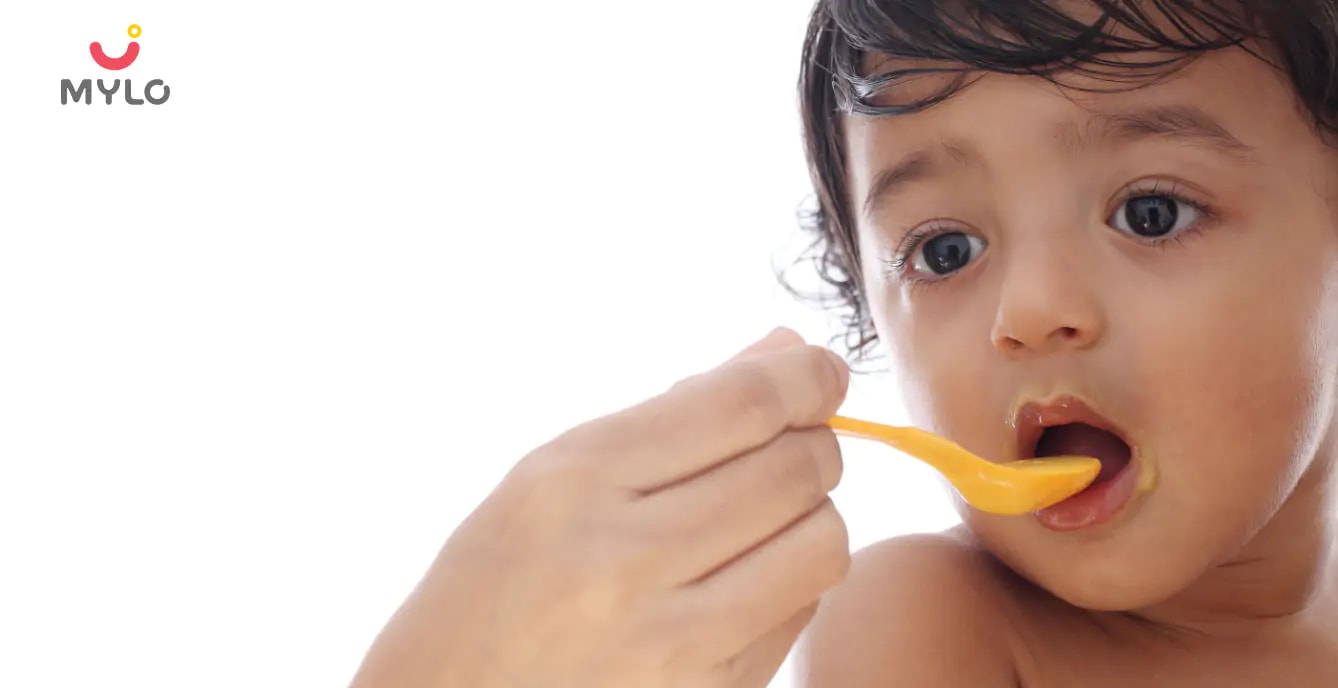
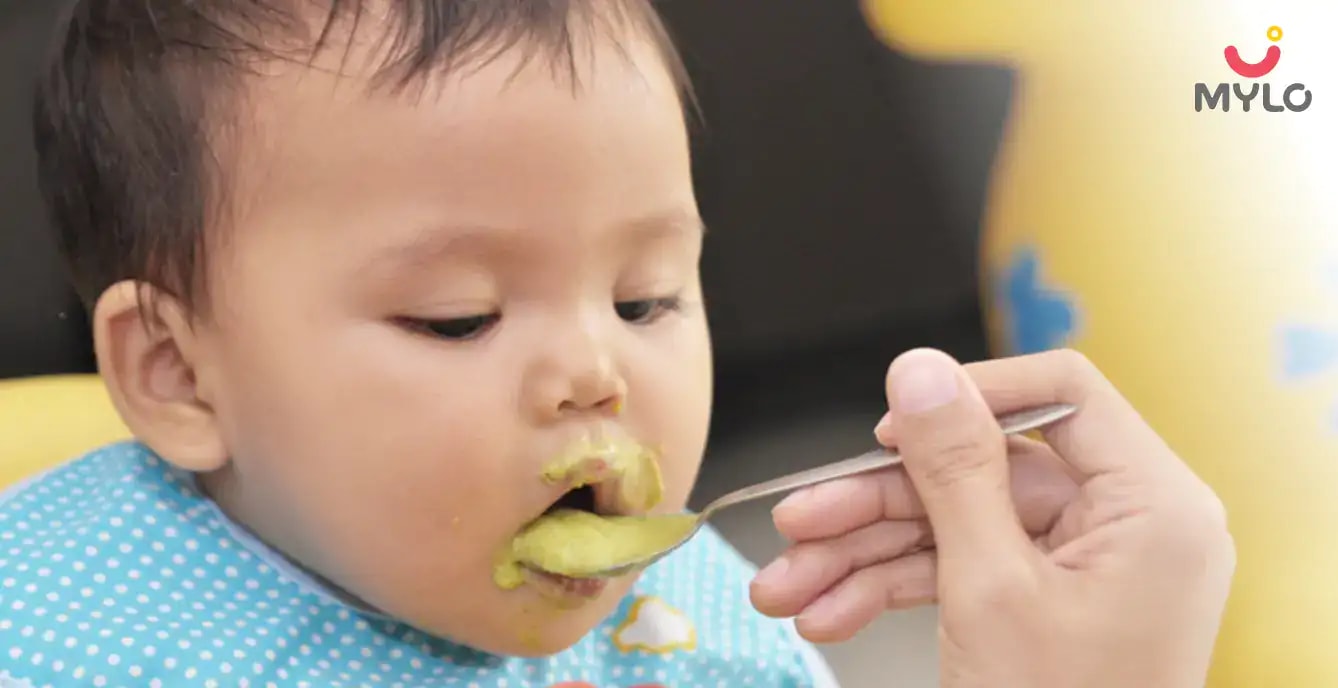
This is the most common question at four months, and the honest answer is: usually not yet. At 4 months, breast milk or formula meets all your baby's needs. Most health authorities, including the WHO, the American Academy of Pediatrics and the Indian Academy of Pediatrics, recommend starting solids at around 6 months, and never before 4 months (WHO).
Some babies show readiness between 4 and 6 months, but this should only happen with your doctor's go-ahead and clear readiness signs. Look for:
- Good head and neck control, able to hold the head steady
- Able to sit up with support
- Showing interest in food and reaching for it
- No longer automatically pushing food out with the tongue (tongue-thrust reflex fading)
If your doctor agrees it is time, start with a single spoonful of soft, smooth food once or twice a day, alongside milk, not instead of it. Introduce foods one at a time, a few days apart, and watch for any allergic reaction. Never give honey before 12 months, and avoid hard or small round foods that can cause choking.
4-Month-Old Development Milestones
Your baby is becoming much more alert, social and expressive this month. You may notice:
- More smiling, laughing, gurgling and cooing
- Following people and objects with their eyes
- Reaching for and grabbing toys
- Pushing up on the arms during tummy time
- Enjoying "conversations" of coos and babbles with you
Every baby develops at their own pace, so do not worry if yours reaches these a little earlier or later. Mention it to your doctor if your baby is not making sounds, not smiling, or not holding their head up at all by this stage.
Growth at 4 Months
Babies come in many healthy shapes and sizes, and growth varies a lot. Rather than fixating on a single number, remember your doctor plots your baby's weight, length and head circumference on a growth chart to check they are following a healthy curve. If your baby falls a little outside an "average" range but is growing steadily and feeding well, that is usually fine, your paediatrician will tell you if anything needs attention.
Tips for the Fourth Month
- Explore textures with touch-and-feel board books like Pat the Bunny
- Read or sing to your baby every day, they love your voice, singing skill optional
- Talk during daily routines to build early language
- Give daily tummy time to strengthen neck, back and arm muscles
- Start baby-proofing now, even before crawling: lock cupboards, fit stair gates, and keep cleaning products and small or hazardous items well out of reach
Indian Context
In India, there is often family pressure to start solids like ghutti, cerelac, mashed rice or dal water early, sometimes as young as 3 to 4 months. Current guidance is clear: exclusive breastfeeding for about the first 6 months gives the best protection and nutrition, and early solids can increase the risk of infections and tummy upsets. Hold off on solids until around 6 months and your doctor's advice. When you do start, home-cooked, soft, freshly prepared foods (like mashed dal, khichdi, mashed banana or steamed and mashed vegetables) are excellent first foods.
Myths vs Facts
| Myth | Fact |
|---|---|
| Starting solids at 4 months helps the baby sleep better | Solids before the right time do not improve sleep and can cause tummy problems |
| A chubby baby needs solids early | Breast milk or formula is enough until around 6 months, regardless of size |
| Water should be given to a 4-month-old | Under 6 months, breast milk or formula provides all the fluid needed |
| Every baby must start solids at exactly 4 months | Most should wait until around 6 months, guided by readiness and the doctor |
Frequently Asked Questions
4 mahine ke bacche ko solid food (thos aahar) dena chahiye kya? (Hinglish)
Aam taur par nahin. 4 mahine par sirf maa ka doodh ya formula hi kaafi hai. WHO aur IAP ke mutabik lagbhag 6 mahine tak sirf breastfeeding best hai, aur 4 mahine se pehle solids bilkul nahin dena chahiye. Solids shuru karne se pehle doctor se salah lein aur readiness signs dekhein.
4 mahine ke bacche ko din mein kitni baar doodh pilana chahiye? (Hinglish)
Breastfeeding karne wale bacche har 3 se 4 ghante mein doodh peete hain, yaani din mein lagbhag 5 se 6 baar. Formula lene wale bacche har feed mein lagbhag 4 se 6 ounce lete hain. Din mein kam se kam 5-6 geele diapers hona accha sanket hai.
How much should a 4-month-old eat?
Breastfed babies feed about every 3 to 4 hours, and formula-fed babies take roughly 4 to 6 ounces per feed. Watch wet diapers (at least 5 to 6 a day) and steady growth rather than counting exact ounces.
What are the signs my baby is ready for solids?
Good head control, sitting with support, showing interest in food and reaching for it, and the tongue-thrust reflex fading. These usually appear around 6 months. Always confirm with your doctor before starting.
Is it normal for my 4-month-old's feeding pattern to change?
Yes. As babies sleep longer at night and nap more regularly, feeding patterns shift. They may also feed more during growth spurts or illness. This is all normal.
References
- American Academy of Pediatrics (HealthyChildren.org). Starting Solid Foods. www.healthychildren.org
- World Health Organization. Breastfeeding. www.who.int
- Curtis GB (MD, MPH) and Schuler J. (2005). Your Baby's First Year Week by Week. Da Capo Press.
Loved by Parents Nurturing Curious 4-Month-Olds
From feeding essentials to sensory play, find gentle products that support your little one's exciting fourth-month milestones.
Baby Wellness Kit | Skincare Gift Set for Newborns



Article Posted Under
Related Articles

Related Topics
.webp&w=32&q=75)
Medical Disclaimer
This content is for informational purposes only and should not replace professional medical advice. Consult with a physician or other health care professional if you have any concerns or questions about your health. If you rely on the information provided here, you do so solely at your own risk.


AWARDS AND RECOGNITION

Mylo wins Forbes D2C Disruptor award

Mylo wins The Economic Times Promising Brands 2022
AS SEEN IN












- Mylo Care: Effective and science-backed personal care and wellness solutions for a joyful you.
- Mylo Baby: Science-backed, gentle and effective personal care & hygiene range for your little one.
- Mylo Community: Trusted and empathetic community of 10mn+ parents and experts.


Product Categories
Baby Carrier | Baby Soap | Baby Wipes | Stretch Marks Cream | Baby Cream | Baby Shampoo | Baby Massage Oil | Baby Hair Oil | Stretch Marks Oil | Baby Body Wash | Baby Powder | Baby Lotion | Diaper Rash Cream | Newborn Diapers | Teether | Baby Kajal | Baby Diapers Pants | Cloth Diapers | Laundry Detergent | Lactation Granules |