


Orders

Profile


Wallet



AWARDS AND RECOGNITION

Mylo wins Forbes D2C Disruptor award
Mylo wins The Economic Times Promising Brands 2022
AS SEEN IN













- Mylo Care: Effective and science-backed personal care and wellness solutions for a joyful you.
- Mylo Baby: Science-backed, gentle and effective personal care & hygiene range for your little one.
- Mylo Community: Trusted and empathetic community of 10mn+ parents and experts.


Breastfeeding Guide for New Mothers: Free Starter Guide (PDF)
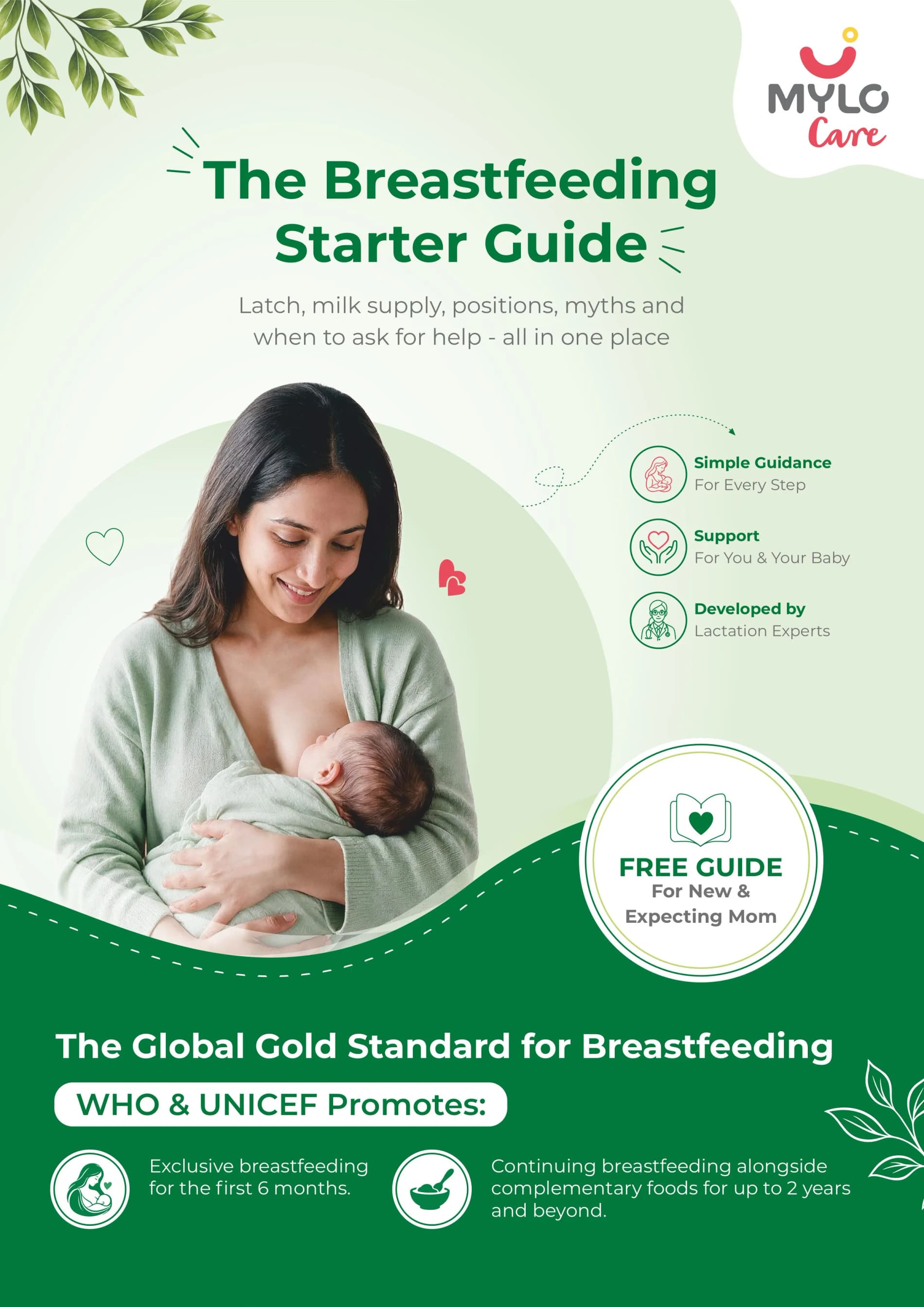
If you searched for a breastfeeding guide at midnight with a hungry newborn in your arms, or in the last weeks of pregnancy wondering whether you will manage, you are in the right place. Mylo's Breastfeeding Starter Guide is a free, 7-page guide developed by lactation experts and based on WHO and UNICEF recommendations. It answers the questions new mothers ask most, from the first feed to the first 6 months, in simple steps you can follow at home. Download it once, keep it on your phone, and come back to it whenever a new doubt appears.
What Is This Breastfeeding Guide About?
The Breastfeeding Starter Guide brings together everything a new mother needs in the first weeks of breastfeeding, in one place and in plain language. It explains how breastfeeding works, what to expect day by day, and how to handle the problems that worry mothers most, so you can feed with more confidence and know when something needs a doctor's attention.
Inside the guide:
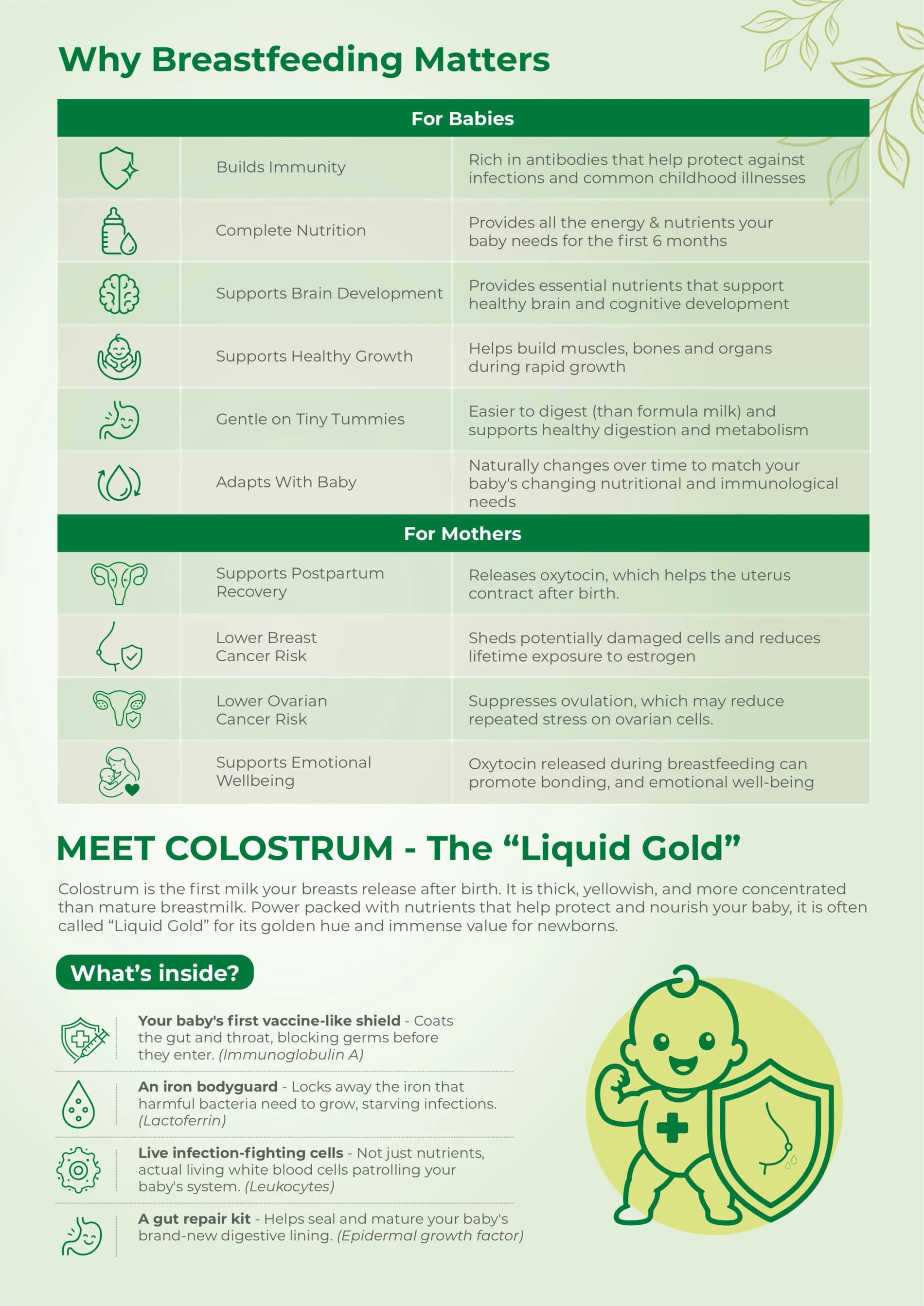
- Why breastfeeding matters: how breast milk builds your baby's immunity and supports growth, and how it helps your own recovery after birth
- Colostrum, the "liquid gold": what your first milk contains and why your newborn needs it
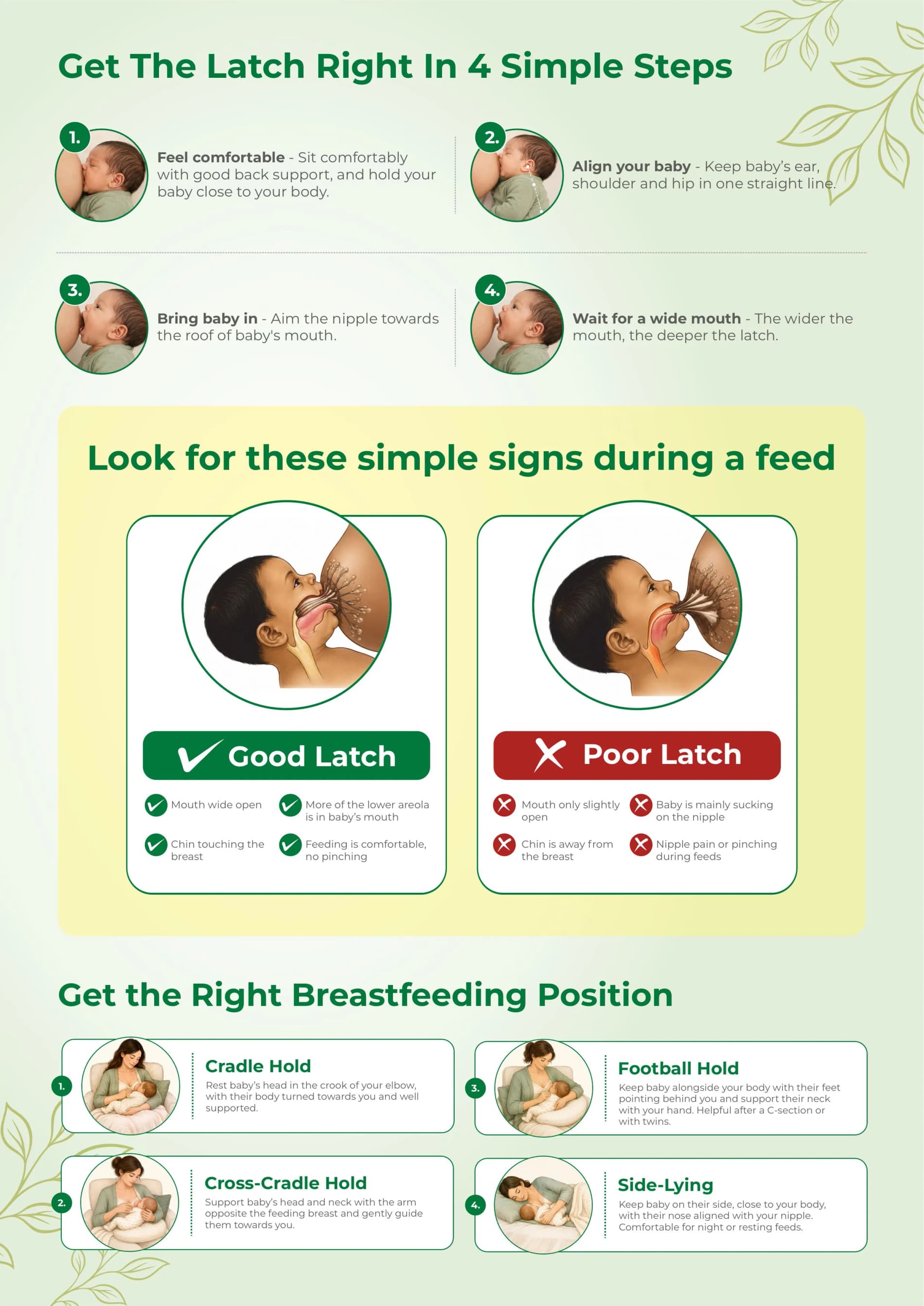
- Getting the latch right: step-by-step latching, with good latch and poor latch signs side by side
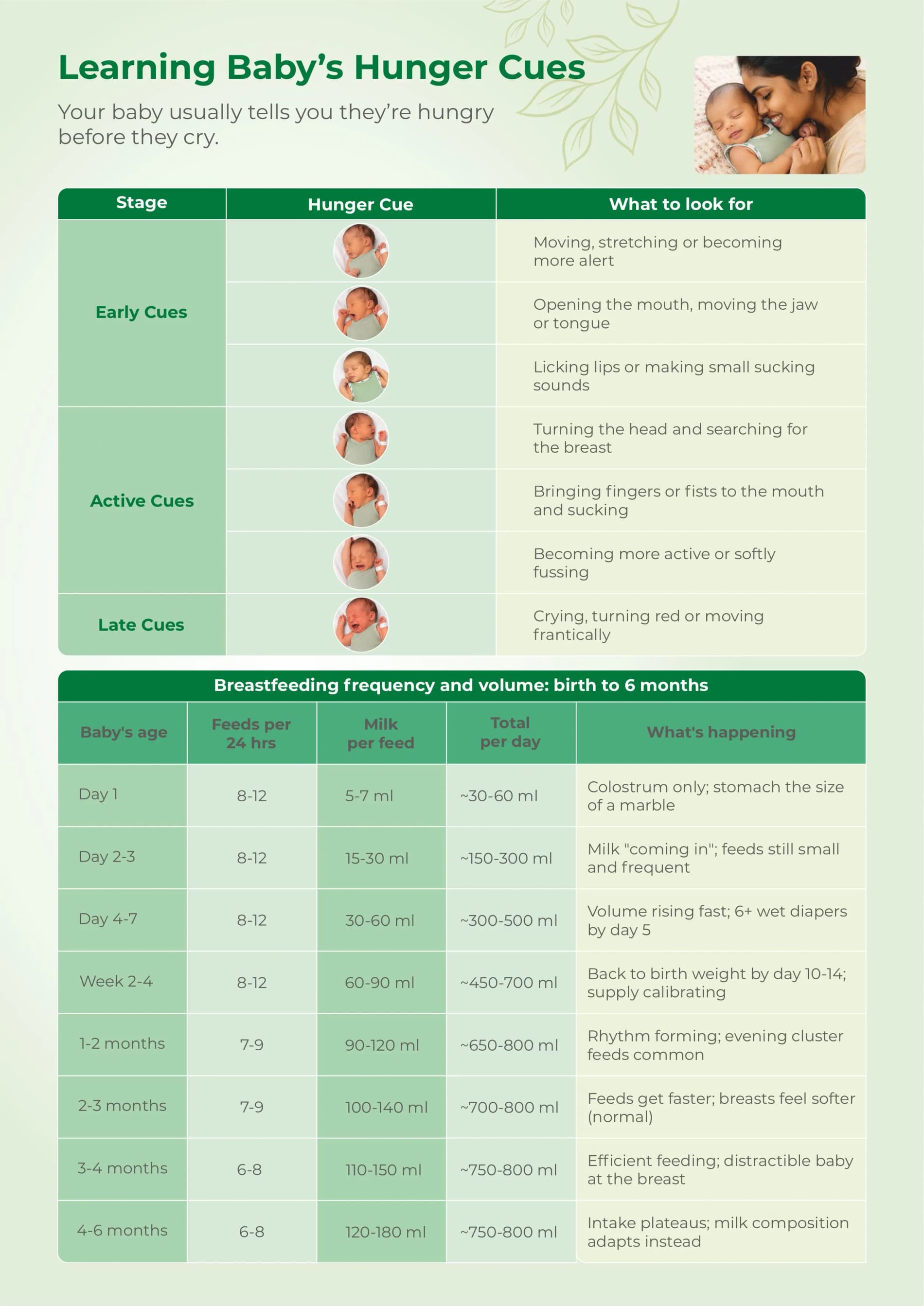
- Hunger cues: early, active and late signs that your baby is ready to feed
- Feeding chart from birth to 6 months: feeds per day, milk per feed and what is normal at each stage
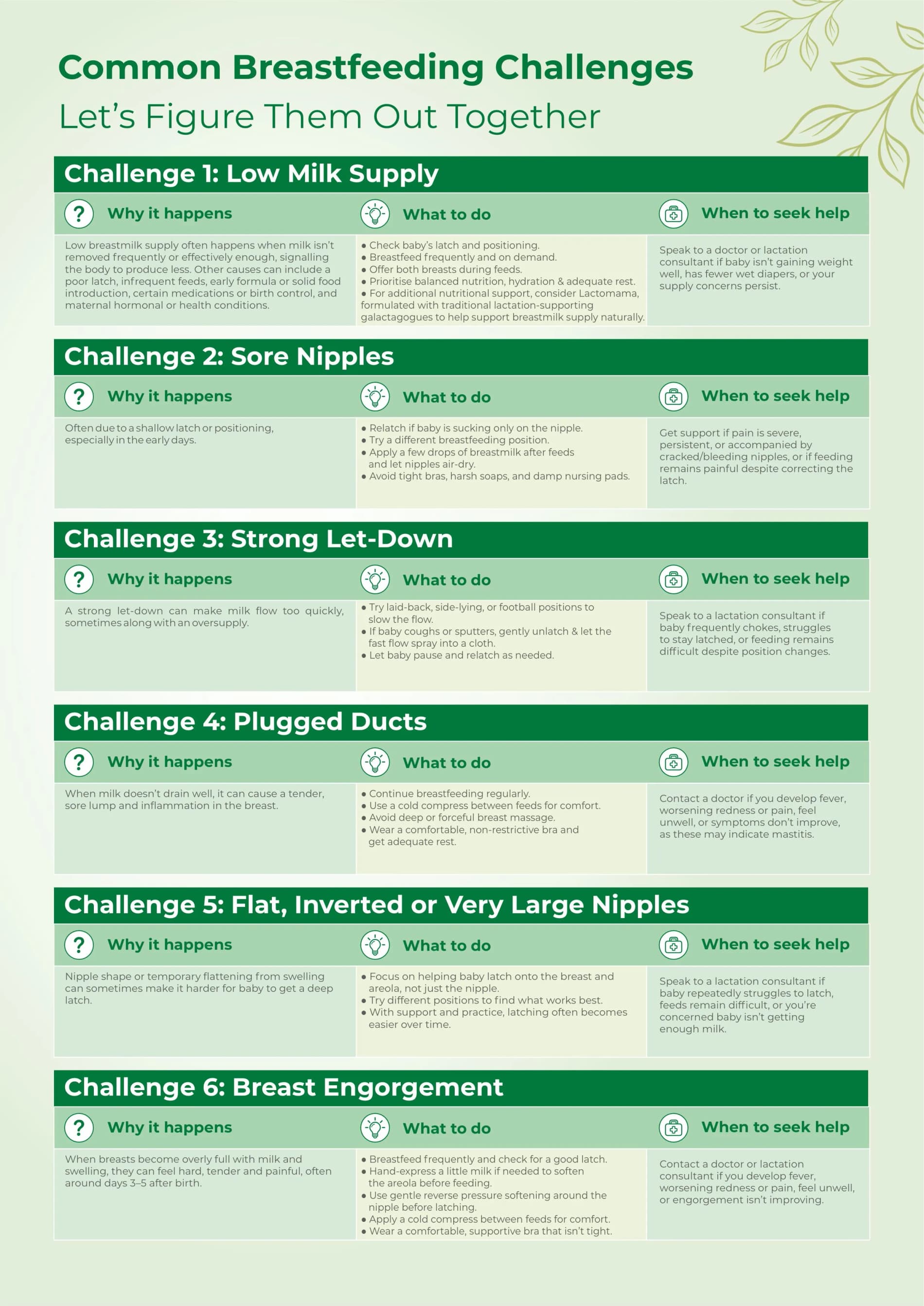
- Common challenges: low milk supply and sore nipples, why they happen, what to do and when to get help
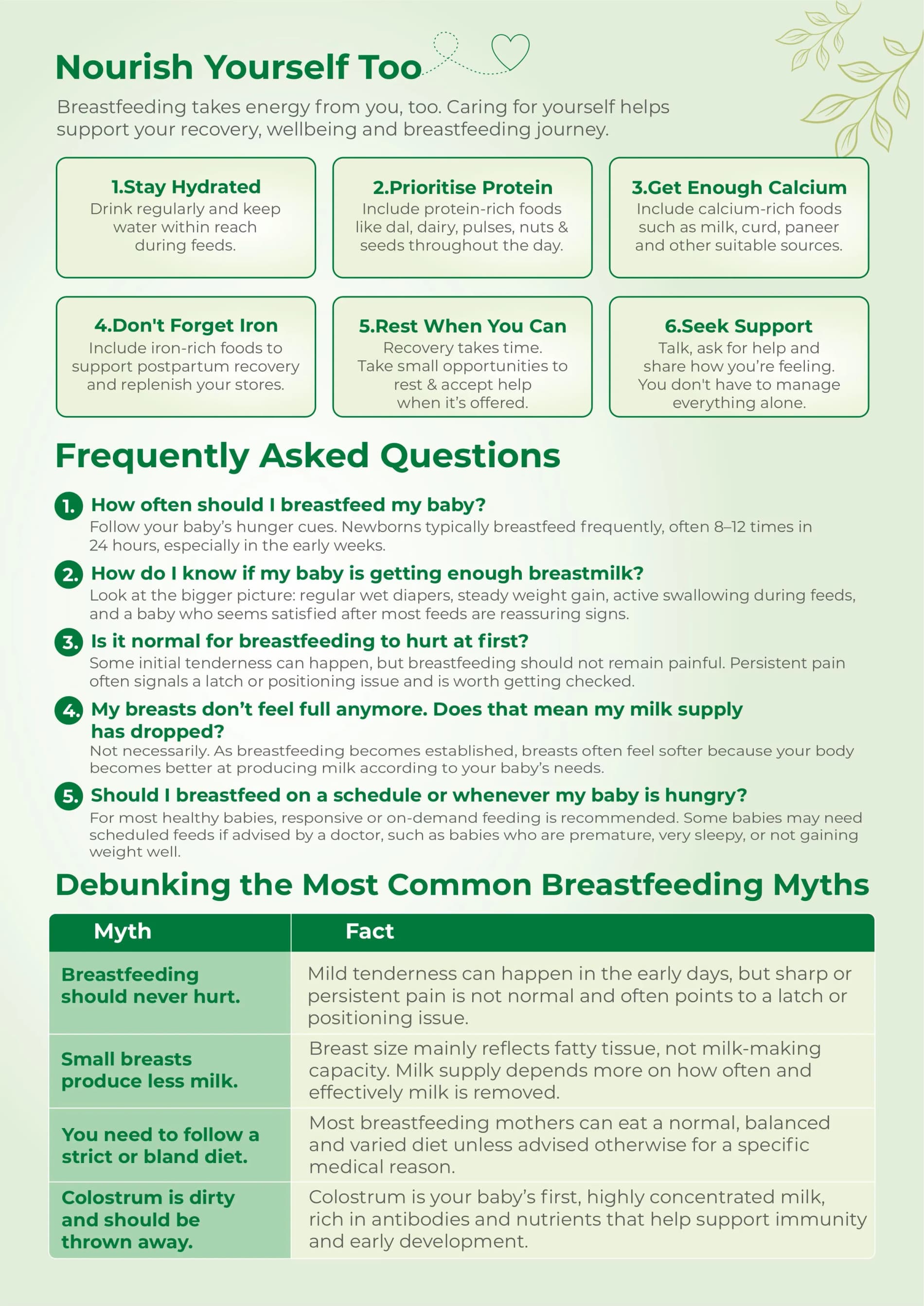
- Nourishing yourself: eating, drinking and resting well while you breastfeed
- Myths and answers: the advice you hear at home, checked against the evidence
Who it is for: expecting mothers who want to prepare before the baby arrives, first-time mothers in the early weeks, and partners or grandparents helping at home.
Your Breastfeeding Doubts, Answered
Below are the doubts mothers bring to us most often, with short answers and where to find more in the guide.
How do I start breastfeeding my newborn?
Most mothers can start in the first hour after birth, with the baby held skin to skin on the chest. The World Health Organization recommends starting within that first hour (WHO), because early, frequent feeding helps your milk supply build. Your first milk, colostrum, comes in small amounts, and that is normal: it is thick, concentrated and full of antibodies that help protect your baby. The guide's colostrum page explains what it contains and why it is called "liquid gold".
Is my baby getting enough breast milk?
This is the most common worry, and in most cases the baby is doing fine. The surest signs are nappies and weight, not how full your breasts feel. From about day 5, the NHS says to expect at least 6 heavy wet nappies every 24 hours, and steady weight gain after the first few days (NHS). The guide includes a feeding chart from birth to 6 months showing feeds per day and typical milk per feed at each stage, so you can see what is normal for your baby's age.
How often should a newborn breastfeed?
Usually 8 to 12 times in 24 hours in the first weeks, including at night. Feeding when your baby shows hunger, rather than by the clock, is what helps supply build. Babies show hunger long before they cry: stirring, opening the mouth, sucking on fists. The guide's hunger cue chart sorts these into early, active and late signs, so you can start a feed while your baby is still calm.
Does breastfeeding hurt? How do I get the latch right?
Some tenderness in the first days can happen, but breastfeeding should not stay painful. Ongoing pain usually means the latch needs adjusting (Cleveland Clinic). The guide shows the latch step by step, with good latch and poor latch signs side by side, so you can check a feed yourself before asking for help.
Can I give my baby water, ghutti or honey?
Not in the first 6 months. WHO advises breast milk alone, with no water or other liquids. India's MAA programme, run by the Ministry of Health and Family Welfare, also advises against gur, ghutti, honey or sweet water for newborns (MoHFW). The guide's myths page covers the advice you are most likely to hear at home, and what the evidence says.
When should I use a breast pump?
A pump helps when you need to be away from your baby, return to work, or want to store milk for someone else to feed (Cleveland Clinic). It can also relieve breasts that feel uncomfortably full. In the early weeks, the NHS suggests expressing only enough for comfort, because removing extra milk tells your body to make more than your baby needs (NHS). If you are planning ahead, you can choose a manual or electric breast pump from Mylo.
What if my milk supply feels low?
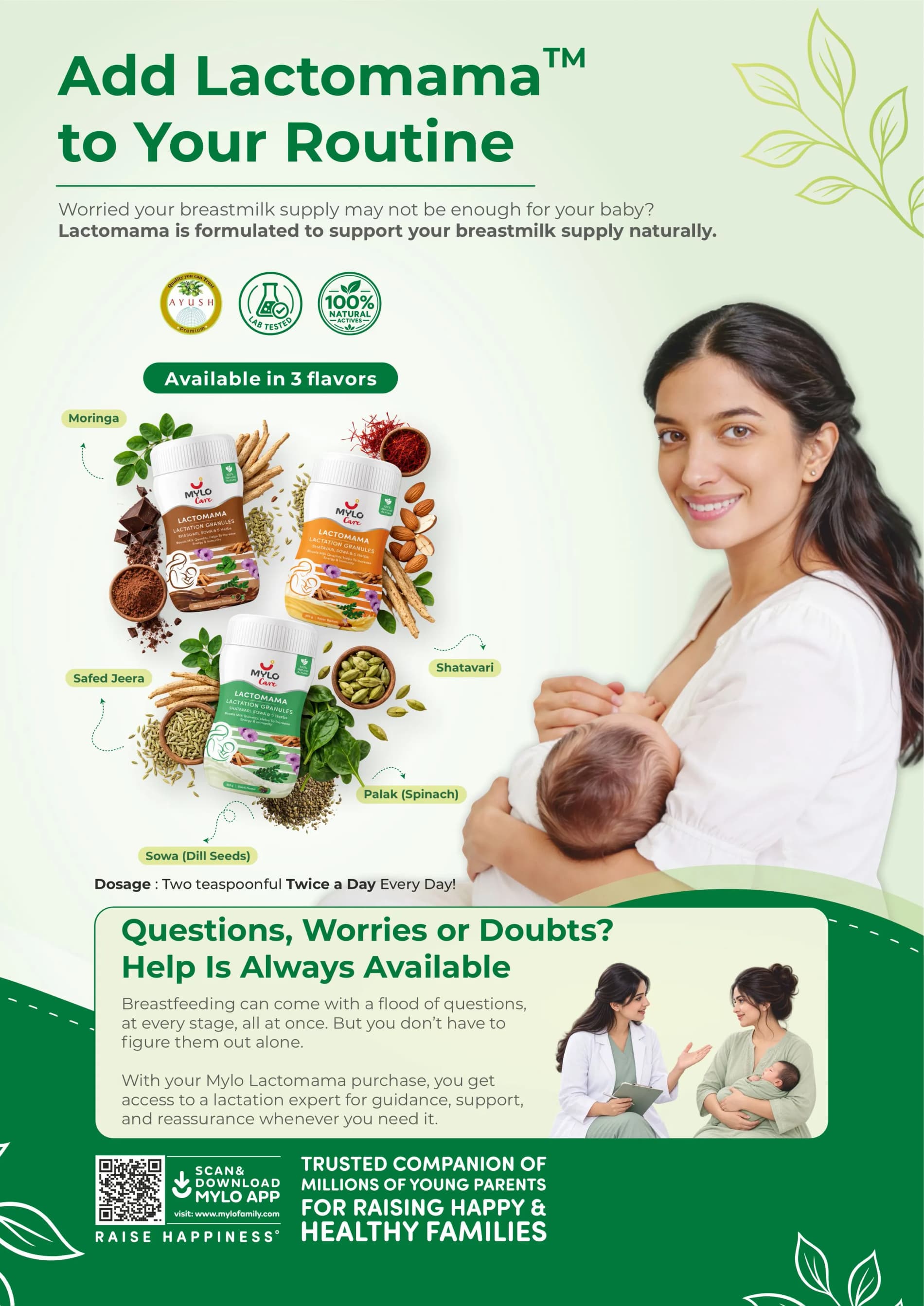
You are not alone. Worry about not making enough milk is one of the most common reasons mothers stop breastfeeding early. The first steps are usually feeding more often, offering both breasts and checking the latch, and the guide's "common challenges" page walks you through them, with clear signs for when to see a doctor or lactation consultant. For extra nutritional support, Mylo LactoMama lactation granules, made with Shatavari, Moringa, Sowa, Safed Jeera and Palak, can be part of your routine, and every purchase includes access to a lactation expert.
How long should I breastfeed?
WHO recommends only breast milk for the first 6 months, then continuing to breastfeed alongside solid foods up to 2 years or beyond. How long you continue is your choice, and the guide supports you at every stage.
When should I ask a doctor for help?
Speak to your doctor or a lactation consultant if your baby has fewer wet nappies than expected, is not gaining weight, or if feeding stays painful even after you adjust the latch. Seek care promptly for a hot, swollen, painful area on the breast with fever, which can be a sign of mastitis (NHS). Asking early is always better than waiting.
Frequently Asked Questions About the Guide
Is the Breastfeeding Starter Guide free?
Yes. The guide is free to download and read.
Who created the guide?
It was developed by lactation experts and follows WHO and UNICEF breastfeeding recommendations: breast milk alone for the first 6 months, then continued breastfeeding alongside solid foods up to 2 years or beyond.
Can I read it before my baby is born?
Yes. Reading it in the last weeks of pregnancy helps you know what to expect in the first hour and the first week, when questions come thick and fast.
Is the guide useful if I have had a C-section?
Yes. Most of the guide applies whatever kind of birth you had, and skin-to-skin contact and the first feed are usually still possible soon after a caesarean (NHS).
Does the guide cover pumping?
It focuses on feeding at the breast. For pumping, see the answer above on when to use a breast pump, and the power pumping article in Related Reads.
Does the guide replace advice from my doctor?
No. It is a practical companion to keep beside you. If your baby has fewer wet nappies than expected, is not gaining weight, or feeding stays painful, speak to your doctor or a lactation consultant.