


Orders

Profile

Home

Pregnancy Best Foods
Sabja (Basil) Seeds During Pregnancy: Safe Daily Amount, Benefits, Side Effects and Trimester Guide (2026)
In this Article
Pregnancy Best Foods
Sabja (Basil) Seeds During Pregnancy: Safe Daily Amount, Benefits, Side Effects and Trimester Guide (2026)
Updated on 28 May 2026


Medically Reviewed by
Dr. Shruti Tanwar
C-section & gynae problems - MBBS| MS (OBS & Gynae)
View Profile

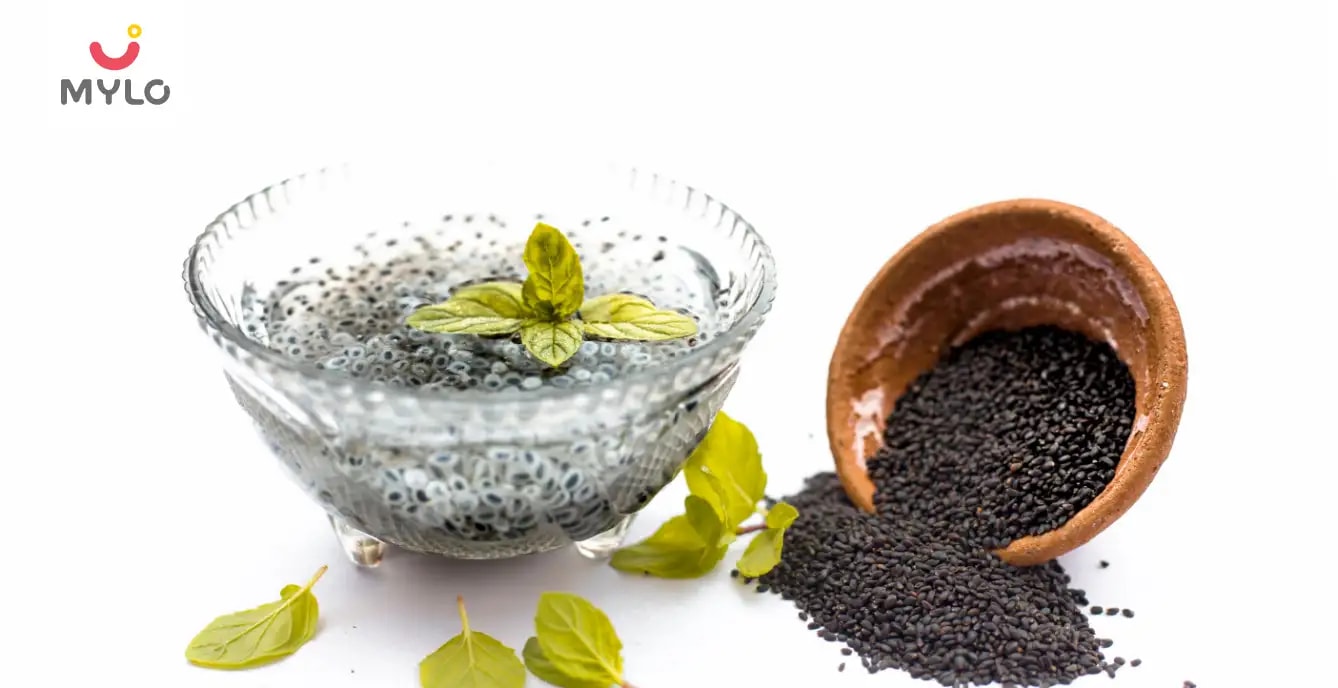
Yes, sabja seeds (also called tukmaria or sweet basil seeds) are safe during pregnancy when consumed in moderation. The recommended safe daily amount is 1 to 2 teaspoons (about 13 grams), always soaked in water for at least 15 minutes before eating. Sabja seeds provide iron, calcium, fibre, magnesium, and plant-based omega-3 (ALA). They help manage acidity, heartburn, constipation, and blood sugar. Avoid raw sabja seeds (choking hazard) and limit intake in the first trimester if you have a history of miscarriage.
Pregnancy and food questions go hand in hand. Sabja seeds, those tiny black seeds that swell into translucent jelly when soaked, are a popular Indian summer ingredient in drinks like falooda, sherbet, and rose milk. The question every pregnant woman asks is whether they remain safe through the trimesters. The short answer is yes, with sensible limits. This guide covers everything you need to know.
What Are Sabja Seeds and How Are They Different from Chia Seeds?
Sabja seeds come from the sweet basil plant (Ocimum basilicum). They are also known as tukmaria, falooda seeds, sabudana seeds (incorrectly, sabudana is different), and basil seeds in English.
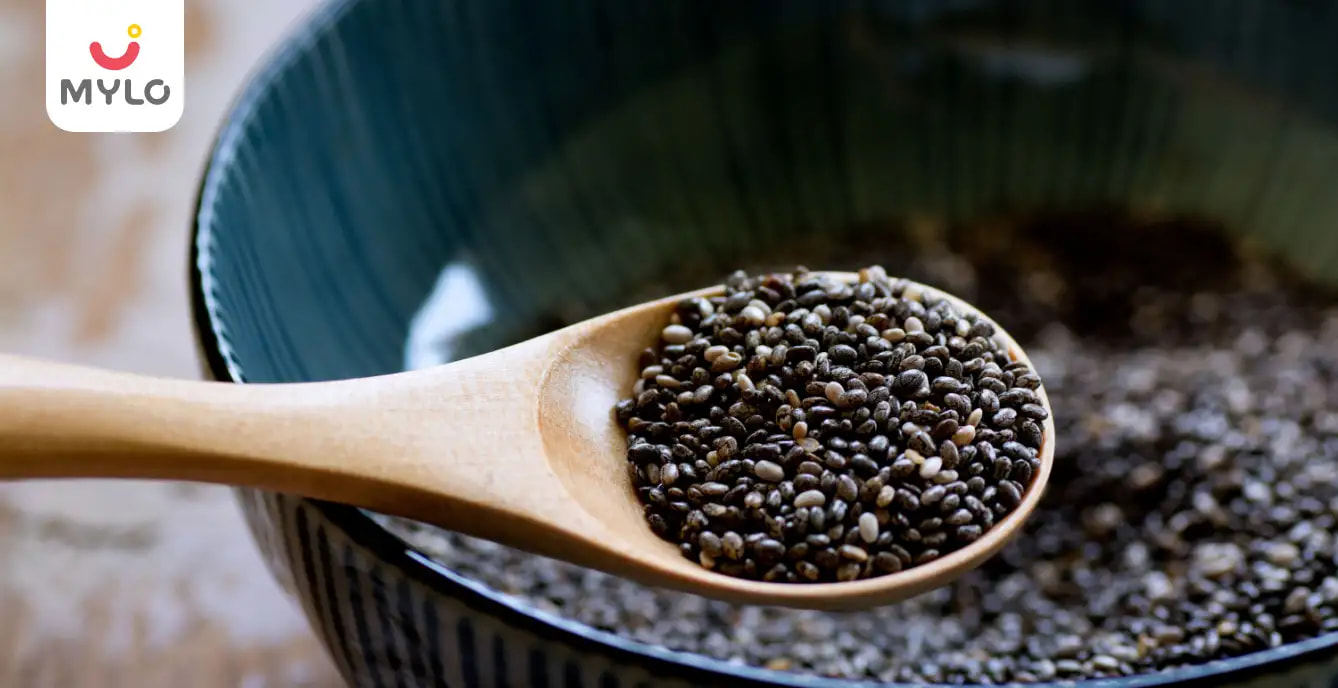
Many people confuse sabja seeds with chia seeds. Here is the difference.
| Feature | Sabja Seeds | Chia Seeds |
|---|---|---|
| Plant source | Sweet basil (Ocimum basilicum) | Salvia hispanica |
| Origin | Indian subcontinent | Mexico, Central America |
| Colour | Black, oval | Black or white, round |
| Soaking time | 15 minutes (faster) | 30 minutes |
| Texture when soaked | Translucent gel coating | Thicker gel |
| Cost in India | Cheap, locally available | More expensive, imported |
| Indian dishes | Falooda, sherbet, rose milk | Smoothies, puddings |
Both are nutritionally similar but sabja seeds are the traditional Indian choice, more affordable, and easier to find in local grocery stores.
Is Sabja Safe to Eat During Pregnancy?
Yes, sabja seeds are generally safe during pregnancy when consumed properly.
The key word is "properly." Sabja seeds must always be soaked in water or another liquid (like milk) for at least 15 minutes before eating. Raw sabja seeds expand rapidly when they meet liquid in your throat, which can cause choking.
Pregnant women with the following conditions should consult their doctor before adding sabja seeds to their daily diet:
History of miscarriage or threatened miscarriage in current pregnancy. Currently on blood-thinning medication (sabja has mild blood-thinning properties). Diagnosed with hyperthyroidism or hormone-sensitive conditions. Gestational diabetes (sabja seeds can lower blood sugar). Allergy to basil or related plants.
For most healthy pregnant women, 1 to 2 teaspoons of soaked sabja seeds daily is safe and beneficial through all three trimesters.
What Are the Benefits of Eating Sabja Seeds During Pregnancy?
Sabja seeds offer six significant pregnancy benefits.
1. Manages Acidity and Heartburn
Acidity and heartburn affect up to 80% of pregnant women, especially in the second and third trimesters. Sabja seeds have a natural cooling effect that soothes the stomach lining and neutralises acid reflux. Many Indian grandmothers recommend a glass of sabja water after meals during pregnancy for exactly this reason.
2. Relieves Constipation Naturally
Pregnancy hormones slow digestion, and the growing uterus presses on the intestines, leading to chronic constipation in many women. Sabja seeds are exceptionally fibre-rich (7 grams per tablespoon, which is 25% of daily fibre needs). When soaked, they form a gel that softens stool and eases bowel movement without straining.
3. Helps Manage Blood Sugar
Sabja seeds contain compounds that slow the absorption of glucose from the digestive tract. This helps prevent the sudden blood sugar spikes that can be problematic during pregnancy, especially for women with gestational diabetes risk. The high fibre content also supports steady energy levels.
4. Provides Pregnancy-Critical Nutrients
A single tablespoon of sabja seeds delivers calcium (15% DV) for baby's bone development, iron (10% DV) to help prevent pregnancy anaemia, magnesium (25% DV) for muscle and nerve function, plant-based omega-3 ALA (around 1,240 mg) for baby's brain development, and protein (2 grams) for tissue building.
5. Cools the Body in Summer Pregnancy
Sabja seeds have a long history in Indian and Middle Eastern traditional medicine as a "thanda" (cooling) food. Many women experience increased body heat during pregnancy due to higher blood volume and metabolic rate. Sabja seeds in summer drinks help regulate body temperature naturally.
6. Supports Healthy Skin
The omega-3 and antioxidant content in sabja seeds supports skin elasticity, which is helpful during pregnancy when the skin stretches significantly. Combined with proper external care like Mylo Stretch Marks Oil, internal nutrition from sabja seeds supports skin health from inside and outside.
A pregnant body needs much more than what any single food can provide. Beyond sabja seeds, ensure you are taking a complete prenatal nutrition system. Mylo Mom's Daily Protein Biscuits & Mylo Ovaluna Tablets provides daily necessary protein, and folic acid in pregnancy-safe doses.
How Many Sabja Seeds Can a Pregnant Woman Safely Eat Per Day?
The recommended daily intake is clear and conservative.
| Format | Safe Daily Amount |
|---|---|
| Soaked sabja seeds | 1 to 2 teaspoons (13 grams) |
| Sabja water (1 tsp seeds in glass of water) | 1 to 2 glasses |
| Sabja with milk | 1 small glass |
| Falooda (occasional) | Half a small bowl |
A teaspoon may sound small but sabja seeds expand 5 to 10 times their original volume when soaked. After soaking, 1 teaspoon becomes about a quarter cup of jelly-like seeds. This is more than enough for most preparations.
Do not exceed 2 teaspoons per day. More than that risks digestive side effects and may cause mild blood thinning.
Are Sabja Seeds Safe in the First Trimester?
The first trimester is the most sensitive period of pregnancy. Sabja seeds are generally safe in moderation during weeks 1 to 13, but extra caution is warranted.
Why caution in the first trimester:
The risk of miscarriage is naturally higher in the first trimester. Some traditional Ayurvedic texts suggest sabja seeds may have mild uterine-stimulating effects. While modern research shows this risk is minimal in normal doses, women with a history of miscarriage should consult their doctor first. Animal studies (not on pregnant women) have shown sabja extracts can affect hormones in high doses.
If your gynaecologist clears sabja seeds for you, stick to 1 teaspoon daily, always well-soaked in the first trimester. Skip if you experience spotting, cramping, or other warning signs.
For nausea and acidity in the first trimester, sabja water (1 teaspoon seeds in a glass of water with a few drops of lemon) is a traditional Indian remedy that works for many women.
Are Sabja Seeds Safe in the Second and Third Trimesters?
Yes, sabja seeds are safest in the second and third trimesters.
By the second trimester, the pregnancy is more stable. Sabja seeds become particularly helpful for managing the digestive issues that intensify as the uterus grows. Constipation, acidity, heartburn, and body heat all peak in the third trimester. Sabja seeds address all four naturally.
In the second trimester (weeks 14 to 27): 1 to 2 teaspoons daily is safe. Pair with fennel water for digestive support.
In the third trimester (weeks 28 to 40): 1 to 2 teaspoons daily, but reduce or pause in the last 2 weeks before delivery due to mild blood-thinning properties (especially important if you may need a C-section).
Can Pregnant Women Drink Sabja Seeds Water?
Yes, sabja water is one of the safest and most popular ways to consume sabja during pregnancy.
How to make pregnancy-safe sabja water:
Step 1: Add 1 teaspoon of sabja seeds to a glass of room-temperature or warm water (not boiling).
Step 2: Let it sit for 15 minutes until the seeds expand and become translucent.
Step 3: Add a teaspoon of honey or jaggery if you prefer sweetness. Avoid added sugar.
Step 4: Squeeze in fresh lemon juice (optional, for digestion and Vitamin C).
Step 5: Drink slowly, preferably mid-morning or early evening.
Sabja water helps with morning sickness, acidity, dehydration in summer, and constipation. Many women find it more soothing than plain water during pregnancy.
What Are the Side Effects and Risks of Sabja Seeds in Pregnancy?
While safe in moderation, sabja seeds can cause issues when overconsumed or eaten improperly.
Common Side Effects of Overconsumption
Diarrhoea and loose motions, due to high fibre and gel content. Stomach cramps and bloating. Excessive lowering of blood sugar (can cause dizziness in pregnant women). Mild blood thinning, which may increase bleeding risk if combined with aspirin or blood thinners. Allergic reactions in very rare cases (itching, hives, throat swelling).
Specific Pregnancy Risks
Choking hazard: Raw, unsoaked sabja seeds expand rapidly when meeting saliva or water in the throat. Always soak for 15 minutes minimum.
Hormonal effects: High doses may mildly affect oestrogen levels in some women. This is why exceeding 2 teaspoons daily is not recommended.
Pre-delivery concerns: The mild blood-thinning effect can be a concern in the final 2 weeks before delivery or if a C-section is scheduled. Pause sabja seeds 2 weeks before your due date and inform your doctor.
Interaction with medications: Sabja seeds may interact with thyroid medications, blood thinners, and diabetes medications. Always disclose your sabja consumption to your gynaecologist.
Can You Eat Falooda During Pregnancy?
Yes, falooda is generally safe in moderation during pregnancy, with some precautions.
Traditional falooda contains sabja seeds, vermicelli (sevaiyan), rose syrup, milk, and ice cream or kulfi. Each ingredient deserves separate consideration.
| Ingredient | Pregnancy Safety |
|---|---|
| Sabja seeds | Safe (soaked, 1-2 tsp) |
| Vermicelli | Safe |
| Rose syrup | Safe in moderation, choose homemade if possible |
| Pasteurised milk | Safe |
| Ice cream | Safe if made from pasteurised milk only |
| Street-vendor falooda | Avoid (food safety concerns) |
Have falooda from clean, hygienic places. Avoid roadside falooda due to risk of unpasteurised dairy, listeria, and contaminated water. Homemade falooda with pasteurised ingredients is the safest option.
Limit to half a small bowl, once or twice a week. Avoid daily falooda due to high sugar content.
How to Eat Sabja Seeds Safely During Pregnancy
Six safe and tasty ways to include sabja in your pregnancy diet.
Sabja water: 1 teaspoon soaked in a glass of water, sipped through the day.
Sabja milk: Add 1 teaspoon soaked sabja to a glass of warm milk with a pinch of cardamom. Pregnancy-safe bedtime drink for those without lactose issues.
Sabja smoothie: Blend with banana, yogurt, and a date for natural sweetness. Great breakfast option.
Sabja with curd (yogurt): Mix soaked sabja into thick curd with a pinch of jeera powder and a little salt. Cooling summer snack.
Sabja sherbet (home-made): Mix sabja with rose water and a little jaggery. Safer than store-bought rose sherbet which often has added preservatives.
Sabja with coconut water: Hydrating and electrolyte-rich. Perfect for summer pregnancy.
Avoid raw sabja seeds, unsoaked sabja in dry preparations, sabja in alcoholic drinks (obviously avoid alcohol entirely in pregnancy), and unpasteurised milk preparations.
When Should You Avoid Sabja Seeds During Pregnancy?
Avoid or significantly reduce sabja seeds in these situations.
If you have a history of miscarriage, especially recurrent miscarriage. If you experience spotting, cramping, or other warning signs in your current pregnancy. If you are on blood thinners or aspirin therapy for high-risk pregnancy. If you have thyroid medication adjustments ongoing. If you have severe gestational diabetes with frequent hypoglycaemia. In the final 2 weeks before delivery, especially if a C-section is planned. If you have a known allergy to basil or related herbs.
For all these conditions, ask your gynaecologist about whether sabja seeds are safe for your specific situation.
Frequently Asked Questions
Are sabja seeds safe in the first trimester?
Yes, sabja seeds are safe in moderation during the first trimester (1 teaspoon daily, always soaked). However, women with a history of miscarriage should consult their gynaecologist before consuming them in the first trimester.
Can I drink sabja seeds water during pregnancy?
Yes, sabja water is one of the safest ways to consume sabja during pregnancy. Soak 1 teaspoon of sabja in a glass of water for 15 minutes, drink 1 to 2 glasses daily. It helps with acidity, constipation, and dehydration.
How much sabja seeds can I eat per day during pregnancy?
Stick to 1 to 2 teaspoons (about 13 grams) of dry sabja seeds, always well-soaked before eating. Do not exceed 2 teaspoons per day.
Are basil seeds and sabja seeds the same?
Yes, sabja seeds and basil seeds are the same thing. They come from the sweet basil plant (Ocimum basilicum). Sabja is the Hindi name, tukmaria is another common Indian name, and falooda seeds is the food-related name. All refer to the same seed.
Can I eat falooda during pregnancy?
Yes, in moderation and from hygienic sources. Limit to half a small bowl once or twice a week. Avoid roadside falooda due to food safety concerns. Homemade falooda with pasteurised ingredients is safest.
Do sabja seeds cause miscarriage?
No conclusive scientific evidence shows that moderate sabja seed consumption causes miscarriage in healthy pregnancies. However, women with a history of miscarriage are advised to consult their doctor before regular consumption, especially in the first trimester.
Can sabja seeds help with morning sickness?
Yes, many women find sabja water with a few drops of lemon helps reduce nausea and acidity. The cooling effect soothes the stomach. Try it mid-morning when nausea peaks.
Are sabja seeds good for pregnancy anaemia?
Sabja seeds contain iron and can support iron levels, but they alone are not enough to treat anaemia. Continue your prescribed iron supplement and eat iron-rich foods alongside. Pair sabja with Vitamin C-rich foods (lemon, amla, oranges) to boost iron absorption.
Can I eat sabja seeds in summer pregnancy?
Yes, sabja seeds are especially helpful in summer pregnancy due to their cooling properties. Sabja water, sabja with coconut water, and sabja sherbet are traditional Indian summer pregnancy remedies.
What is the difference between sabja seeds and chia seeds for pregnancy?
Both are safe and similar in nutrition (high fibre, omega-3, calcium). Sabja seeds are cheaper, more easily available in India, soak faster (15 minutes vs 30 for chia), and have been used in Indian cuisine for centuries. Chia seeds are slightly higher in omega-3 but more expensive.
Can I take sabja seeds with my prenatal vitamins?
Yes, sabja seeds do not interfere with prenatal vitamins. However, take them at least 1 hour apart from iron supplements as the high fibre content can slightly reduce iron absorption.
Should I stop sabja seeds before delivery?
Yes, stop or significantly reduce sabja seeds 2 weeks before your due date. The mild blood-thinning property can increase bleeding risk during delivery, especially if a C-section becomes necessary.
Final Thoughts
Sabja seeds are one of the most underrated pregnancy-friendly foods in Indian kitchens. They are cheap, easily available, rich in nutrients pregnant women specifically need, and gentle on the stomach. Used in moderation, they can address some of pregnancy's most uncomfortable symptoms naturally, acidity, constipation, body heat, and energy slumps.
The rules are simple. Always soak for 15 minutes before eating. Stick to 1 to 2 teaspoons daily. Drink as sabja water, milk, smoothie, or with yogurt. Pause 2 weeks before delivery. Always consult your gynaecologist if you have any high-risk pregnancy condition.
Wishing you a healthy and joyful pregnancy.
Related Reads on Mylo
Plum (Aloo Bukhara) in Pregnancy: Benefits, Side Effects, Safe Daily Amount
Pear in Pregnancy: Benefits, Risks and Guidelines
Cauliflower During Pregnancy: Effects, Risks, Benefits
Is Radish Safe to Eat While Pregnant?
Tapioca During Pregnancy: Benefits and Side Effects
Smelly Farts and Gas During Pregnancy: Causes and Relief
Things to Avoid in Early Pregnancy to Prevent Miscarriage
 Yes
Yes
 No
No
Medically Reviewed by
Dr. Shruti Tanwar
C-section & gynae problems - MBBS| MS (OBS & Gynae)
View Profile

Written by
sakshi prasad
Get baby's diet chart, and growth tips

Related Articles
Related Questions
Pregnancy madhe 6 month madhe sabja khale tar kay hote

RECENTLY PUBLISHED ARTICLES
our most recent articles

Play Activities
250+ Best Paheliyan with Answers for Kids: The Ultimate Riddle Collection (2026)
Women Specific Issues
Fat Vagina (Mons Pubis): Average Size, Types, Causes, FUPA Explained and When to See a Doctor (2026)

Baby Names
220+ Girl Baby Names in Tamil with Meanings (2026): The Ultimate Modern, Unique & A-Z Collection
Papaya (Papita) In Pregnancy: Ripe Vs Unripe, Daily Limit, Trimester Guide, And The Truth About Miscarriage Risk For 2026

Home Remedies
Navel Displacement (Naaf Utarna, Dharan, Pechoti): What It Really Means, What Could Actually Be Causing It, And When To See A Doctor In 2026
Pregnancy Tests
Finger Test For Pregnancy: What Works, What Doesn't, And What Indian Gynaecologists Recommend In 2026
- Constipation in early pregnancy
- How To Prevent Pregnancy After Sex
- What are the Chances of Pregnancy at 40 Years and What to Expect?
- Black Grapes During Pregnancy: Benefits, Risks & When to Avoid (2026)
- 14 Lifesavers For Your First Trimester
- Pregnant ladies and new moms: what to eat and what not to eat while fasting in Navratras
- What to Do if My Toddler is Underweight?
- A Guide to Recognizing Symptoms of Ovulation After HCG Injection
- What is An Ideal Baby's Food Chart?
- How to tell if congestion in the nose is due to pregnancy rhinitis or something else and ways to treat it?
- What is Cord Blood Banking and Should you get it done?
- Does A Manual Breast Pump Help to Pump More Milk?
- Top 6 Reasons Why Babies Wake Up at Night
- What Causes Low HCG Levels in Early Pregnancy & How to Increase It?


AWARDS AND RECOGNITION

Mylo wins Forbes D2C Disruptor award

Mylo wins The Economic Times Promising Brands 2022
AS SEEN IN












- Mylo Care: Effective and science-backed personal care and wellness solutions for a joyful you.
- Mylo Baby: Science-backed, gentle and effective personal care & hygiene range for your little one.
- Mylo Community: Trusted and empathetic community of 10mn+ parents and experts.


Product Categories
Baby Carrier | Baby Soap | Baby Wipes | Stretch Marks Cream | Baby Cream | Baby Shampoo | Baby Massage Oil | Baby Hair Oil | Stretch Marks Oil | Baby Body Wash | Baby Powder | Baby Lotion | Diaper Rash Cream | Newborn Diapers | Teether | Baby Kajal | Baby Diapers Pants | Cloth Diapers | Laundry Detergent | Lactation Granules |