


Orders
.png&w=48&q=75 "login")
Profile


Wallet

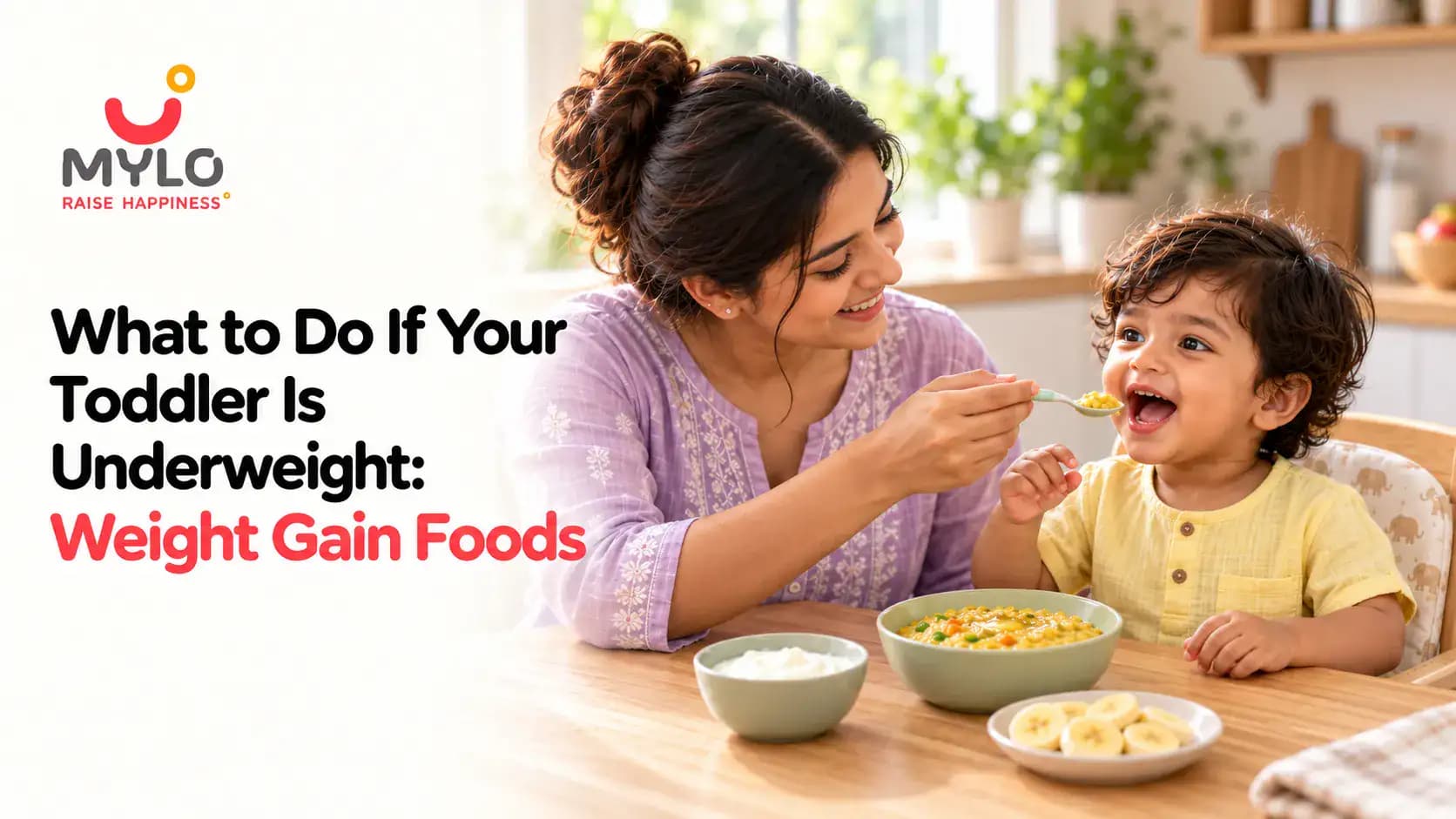
What to Do If Your Toddler Is Underweight: Weight Gain Foods
 421 Likes|
 18 min
Key Takeaways
Quick overview in 30 seconds.webp&w=32&q=75)
- Before worrying, confirm with your paediatrician using growth charts whether your toddler is truly underweight based on height, weight, and growth pattern since birth.
- Help your toddler gain weight healthily by increasing calorie count with nutritious foods like full-fat dairy, paneer, cream cheese, and milk puddings at mealtimes.
- Set a consistent meal routine, create a relaxed distraction-free eating atmosphere, offer healthy snacks like granola bars, and consider doctor-recommended weight gain supplements.
- Looking for healthy weight gain support for your toddler? Explore our MamaGro™ Protein Diskettes - High Protein & No Added Sugar - 250gm (50 Diskettes).
 4.2
4.2Quick Answer
An underweight toddler is a child aged 1 to 3 whose weight is well below the healthy range for their age on a growth chart. Healthy weight gain comes from 3 meals and 2 to 3 snacks of energy-rich Indian foods like ragi, ghee, curd, banana, eggs and dal, not junk food. Check with your pediatrician first.
Underweight Toddler at a Glance
Question | Short Answer |
|---|---|
What does underweight mean? | Weight well below the healthy range for age, usually below the lower line on the WHO growth chart |
How much weight should a toddler gain? | About 2 to 2.5 kg a year between 1 and 3 years |
Is a slim toddler always underweight? | No. Many slim toddlers are healthy and growing steadily on their own curve |
Best weight gain foods | Ghee, ragi, curd, paneer, banana, eggs, dal, sweet potato, ground nuts |
How often to feed | 3 meals and 2 to 3 snacks a day, every 2 to 3 hours |
What to avoid | Junk food, too much milk or juice, force feeding, weight gain syrups without a prescription |
When to see a doctor | No weight gain for 2 to 3 months, weight loss, falling across growth lines, or signs of illness |
Key Facts Every Parent Should Know
Toddlers gain weight slowly: After the fast growth of the first year, weight gain slows down, so appetite often drops too
The growth curve matters most: A toddler growing steadily along their own line is usually healthy, even if small
Quality calories matter: Healthy fats and proteins help, while biscuits and sweets fill the tummy without good nutrition
Too much milk is a common cause: Over 700 ml of milk a day can leave little room for food
Illness slows weight gain: Frequent diarrhoea, worms, anaemia and infections all affect weight
Force feeding backfires: It often makes toddlers eat less over time
Is My Toddler Underweight?
Short answer: Your pediatrician checks this using a growth chart, which compares your toddler's weight with other children of the same age and sex. One low reading isn't enough. The trend over time matters most.
Average toddler weight by age (WHO growth standards)
Age | Boys: Average Weight | Boys: Lower Healthy Limit | Girls: Average Weight | Girls: Lower Healthy Limit |
|---|---|---|---|---|
1 year | 9.6 kg | 7.7 kg | 8.9 kg | 7.0 kg |
2 years | 12.2 kg | 9.7 kg | 11.5 kg | 9.0 kg |
3 years | 14.3 kg | 11.3 kg | 13.9 kg | 10.8 kg |
Lower healthy limit means the "minus 2" line on the WHO chart. A toddler below this line is called underweight and needs a doctor's check.
Example: A 2-year-old girl weighing 10.5 kg is below the average of 11.5 kg, but above the lower limit of 9.0 kg. If she's growing steadily, she's likely healthy.
Signs that need a closer look
Weight falling from one growth line to a lower one
No weight gain for 2 to 3 months
Losing weight
Very thin arms and legs, or ribs easily seen
Low energy, often sick, or pale
You can track weight on the Mother and Child Protection (MCP) card from your Anganwadi or doctor. See also our height and weight chart for boys and girls.
Why Is My Toddler Not Gaining Weight?
Short answer: The most common reasons are eating too little or too much milk, frequent illness, worms, anaemia and picky eating. Sometimes a toddler is simply small, like their parents.
Cause | What to Look For |
|---|---|
Too much milk or juice | Drinks a lot, eats very little food |
Small or skipped meals | Long gaps between meals, grazing on biscuits |
Picky eating | Eats only a few foods |
Frequent illness | Diarrhoea, colds, fever, ear infections |
Worms | Tummy pain, itchy bottom, poor appetite |
Iron deficiency anaemia | Pale, tired, eats mud or chalk |
Screens during meals | Eats less without noticing hunger |
Small parents | Toddler is small but grows steadily |
Born early or small | Premature or low birth weight babies may take longer to catch up |
Health conditions | Thyroid, gut problems like celiac disease, heart or kidney problems, TB |
Best Weight Gain Foods for Toddlers
Short answer: Choose foods that give good energy and nutrition in small amounts. Ghee, ragi, curd, paneer, banana, eggs, dal, sweet potato and ground nuts are great Indian choices.
Food | Why It Helps | How to Give It | Approximate Energy |
|---|---|---|---|
Ghee or butter | Healthy fat, very energy-rich | Add 1 teaspoon to dal, roti, khichdi or rice | About 45 kcal per teaspoon |
Ragi | Energy, calcium and iron | Ragi porridge with milk and dates, ragi dosa, ragi ladoo | About 70 kcal per 2 tablespoons of flour |
Full-fat curd | Protein, calcium, healthy gut | Plain, with fruit, curd rice, raita | About 60 to 70 kcal per small katori (100 g) |
Paneer | Protein and fat | Cubes, bhurji, in paratha | About 65 to 75 kcal per 25 g |
Banana | Quick energy, easy to eat | Mashed, in smoothies, banana pancakes | About 90 kcal per small banana |
Eggs | Protein and healthy fat | Boiled, scrambled, omelette, egg curry | About 70 to 75 kcal per egg |
Dal and rajma | Protein and energy | Dal with ghee, mashed rajma with rice | About 100 kcal per small katori of thick dal |
Sweet potato and potato | Energy and fibre | Mashed with ghee, in paratha, roasted | About 90 kcal per 100 g |
Ground nuts and seeds | Healthy fats, protein | Mix nut powder (badam, akhrot, peanut) into porridge or milk | About 55 to 60 kcal per tablespoon |
Dates and dry fruit powder | Energy and iron | In porridge, ladoo, milkshake | About 20 to 25 kcal per date |
Chicken and fish | Protein | Soft curry, soup with rice, minced | About 50 kcal per 25 g |
Sattu and besan | Protein and energy | Sattu porridge, besan chilla, besan ladoo | About 70 kcal per 2 tablespoons |
Example: Adding 1 teaspoon of ghee to 3 meals a day gives about 135 extra calories (45 x 3), without making portions bigger.
Safety: Never give whole nuts, peanuts or hard pieces to toddlers. They can cause choking. Use powdered nuts or smooth nut butter.
How to Help Your Toddler Gain Weight: 10 Simple Ways
Short answer: Feed every 2 to 3 hours, add healthy fats to meals, limit milk to about 2 cups, and make mealtimes calm and screen-free.
Offer 3 meals and 2 to 3 snacks: Every 2 to 3 hours, at about the same times each day.
Add healthy fats: A teaspoon of ghee or butter on roti, dal, rice or khichdi.
Make every bite count: Mix nut powder into porridge, add paneer to paratha, or blend banana into milk.
Limit milk to about 2 cups (400 to 500 ml) a day: Too much milk fills toddlers up.
No juice or sweet drinks: Offer water between meals instead.
Avoid filling up before meals: No milk, juice or big snacks in the hour before a meal.
Eat together without screens: Toddlers eat better when they watch the family eat.
Let them self-feed: Finger foods like idli pieces, paneer cubes and banana slices make eating fun.
Don't force or bribe: Offer food calmly and let your toddler decide how much to eat.
Treat hidden causes: Deworming, iron for anaemia, and checks for frequent illness, with your doctor's advice.
7-Day Weight Gain Meal Plan for Toddlers
Short answer: This plan adds ghee, nut powder, paneer and eggs to everyday Indian meals. Non-veg families can use the options in brackets.
Day | Breakfast | Mid-Morning | Lunch | Evening Snack | Dinner |
|---|---|---|---|---|---|
Monday | Ragi porridge with milk, dates and nut powder | Mashed banana | Rice, moong dal with ghee, carrot sabzi, curd | Paneer cubes | Khichdi with ghee and vegetables |
Tuesday | Besan chilla with curd (or egg omelette) | Chikoo | Roti with ghee, rajma (mashed), raita | Sweet potato mashed with ghee | Curd rice with grated carrot |
Wednesday | Idli with sambar and ghee | Banana smoothie with curd | Rice, dal, pumpkin sabzi with ghee (or egg curry) | Besan ladoo (small) | Paneer paratha with curd |
Thursday | Sooji upma with vegetables and ghee | Mango or papaya | Lemon rice, dal, beans sabzi (or soft fish curry) | Ragi ladoo with nut powder | Dalia khichdi with ghee |
Friday | Poha with peas and peanuts (ground) | Boiled egg (or paneer) | Roti with ghee, palak paneer, curd | Makhana roasted in ghee (crushed) | Vegetable pulao with raita (or chicken pulao) |
Saturday | Dosa with coconut chutney and ghee | Banana | Rice, sambar, curd | Sattu porridge with milk | Moong dal cheela with paneer |
Sunday | Aloo paratha with butter and curd | Seasonal fruit | Vegetable khichdi with ghee and papad (crushed, small) | Sooji halwa with nut powder (little jaggery) | Rice with dal, potato sabzi and ghee |
Notes:
Mash or chop food finely for younger toddlers
Use only a pinch of salt and very little sugar or jaggery
Offer milk once or twice a day, within about 2 cups total
Read the full toddler diet chart for daily timings
What Should I Avoid?
Short answer: Avoid junk food for "quick weight", force feeding, extra milk, and weight gain syrups or powders without a doctor's advice.
Avoid | Why | Try Instead |
|---|---|---|
Biscuits, chips, sweets, instant noodles | Empty calories, poor nutrition, tooth decay | Ghee, nuts, paneer, ragi |
Force feeding or feeding while distracted | Toddlers learn to dislike meals | Calm meals and self-feeding |
More milk to "make them healthy" | Fills them up and lowers iron | About 2 cups a day |
Weight gain syrups, tonics or powders without a prescription | Some unregulated products have been found to contain hidden steroids or other harmful ingredients | Real food, and supplements only if your doctor advises |
Sugary health drink powders | Added sugar, little real benefit | Plain milk with nut powder |
Comparing with other children | Every child grows differently | Track your child's own growth curve |
When Should I See a Doctor?
Short answer: See your pediatrician if your toddler is below the lower line on the growth chart, has stopped gaining weight, is losing weight, or seems unwell.
Sign | Why It Matters |
|---|---|
No weight gain for 2 to 3 months | Needs a check |
Losing weight | Needs a check soon |
Crossing down 2 growth lines | Growth is slowing |
Weight below the lower healthy limit | Underweight, needs evaluation |
Frequent diarrhoea, vomiting or tummy pain | May be infection, worms or a gut problem |
Cough or fever for more than 2 weeks | May need a check for TB |
Pale, tired, eats mud or chalk | Possible anaemia |
Swelling of feet or face, or very thin arms | Possible severe malnutrition. Needs urgent care |
Delays in walking or talking | Needs a development check |
Who Can Help?
Short answer: Your pediatrician can find the cause, and a dietitian can help plan meals. Free government services can also help.
Who | When to See Them |
|---|---|
Pediatrician | Growth checks, tests for anaemia, worms, thyroid or other causes |
Pediatric dietitian | Weight gain meal plans |
Anganwadi worker | Monthly weight checks, take-home rations, nutrition advice |
Nutrition Rehabilitation Centre (NRC) | Free care for children with severe malnutrition, usually at district hospitals |
Free government support in India
Anganwadi centres: Monthly growth monitoring, take-home rations and hot cooked meals for children under 6
POSHAN Abhiyaan: National programme for child nutrition and growth monitoring
Nutrition Rehabilitation Centres (NRCs): Free treatment for severe acute malnutrition
Anemia Mukt Bharat: Free iron syrup for children aged 6 to 59 months
National Deworming Day: Free deworming from 1 to 19 years
RBSK: Free health checks for children from birth to 18 years
What Should Indian Parents Keep in Mind?
Short answer: Traditional Indian foods like ghee, ragi, curd and dal are excellent for healthy weight gain. Avoid unknown tonics, and don't let relatives' comparisons push you into force feeding.
Ghee: A teaspoon in each meal is a healthy, traditional way to add energy
"Bachcha bahut patla hai": Relatives may compare. If your toddler is growing steadily, they may just be naturally slim
Tonics and powders: Many are sold as "weight gain" products. Use only what your doctor prescribes
Milk overload: Giving milk many times a day is common, but it can reduce appetite for food
Biscuits with tea: A common snack that adds little nutrition. Offer banana or ragi ladoo instead
Deworming: Worms are common and can affect weight. Use free deworming at Anganwadi centres
Joint families: Agree on meal times and limit snacks between meals
Myths vs Facts
Myth | Fact |
|---|---|
A chubby toddler is a healthy toddler | Steady growth along the growth curve matters more than size |
More milk helps toddlers gain weight | Too much milk lowers appetite and iron |
Weight gain syrups are safe because they're "natural" | Some may contain harmful ingredients. Use only with a prescription |
Junk food is fine if it adds weight | Junk food adds calories but not nutrition |
Force feeding helps toddlers eat more | It often makes them eat less over time |
A slim toddler must be unhealthy | Many slim toddlers are perfectly healthy |
Frequently Asked Questions
1. What should I do if my toddler is underweight?
See your pediatrician to check the growth chart and look for causes like anaemia or worms. Then offer 3 meals and 2 to 3 snacks of energy-rich foods, and limit milk to about 2 cups a day.
2. What are the best weight gain foods for toddlers in India?
Ghee, ragi, full-fat curd, paneer, banana, eggs, dal, sweet potato and ground nuts.
3. How much ghee can I give my toddler?
About 1 teaspoon in each meal, or 2 to 3 teaspoons a day, is a healthy amount for most toddlers.
4. Why is my toddler eating well but not gaining weight?
Possible causes include worms, frequent illness, anaemia or a gut problem. See your pediatrician for a check.
5. Are weight gain supplements safe for toddlers?
Only if your doctor prescribes them. Avoid syrups or powders sold as "weight gain" products without a prescription.
6. How much weight should a 2 year old gain in a year?
About 2 to 2.5 kg a year between 1 and 3 years.
7. Is my slim toddler underweight?
Not always. If your toddler is above the lower line on the growth chart and growing steadily, they may just be naturally slim.
8. 2 saal ke bacche ka weight kaise badhaye?
Din mein 3 baar khana aur 2 se 3 baar nashta dijiye. Roti, dal aur khichdi mein ek chammach ghee daliye. Ragi, dahi, paneer, kela, anda aur pisi hui dry fruits dijiye. Doodh din mein 2 cup se zyada mat dijiye.
9. Bacche ko ghee kitna dena chahiye?
Ek se teen saal ke bacche ko din mein lagbhag 2 se 3 chammach ghee, khane mein milakar, dena theek hai.
Related Reads on Mylo
References
World Health Organization (WHO). "Child Growth Standards: Weight-for-age." https://www.who.int/tools/child-growth-standards
ICMR-National Institute of Nutrition. "Nutrient Requirements for Indians." 2020.
ICMR-National Institute of Nutrition. "Indian Food Composition Tables." 2017.
Indian Academy of Pediatrics (IAP). "Growth Charts for Indian Children." 2015.
Ministry of Women and Child Development, Government of India. "POSHAN Abhiyaan." https://poshanabhiyaan.gov.in
Ministry of Health and Family Welfare, Government of India. "Operational Guidelines on Facility Based Management of Children with Severe Acute Malnutrition (NRCs)."
Ministry of Health and Family Welfare, Government of India. "Anemia Mukt Bharat." https://anemiamuktbharat.info
Medical Disclaimer
This article is for information only and does not replace professional medical advice. Every toddler grows differently. If you're worried about your toddler's weight or growth, please consult your pediatrician or a qualified dietitian.

Trusted by Mothers Nurturing Growing Toddlers
Gentle nutrition support and wholesome options to help your little one grow stronger, one healthy meal at a time.
Baby Wellness Kit | Skincare Gift Set for Newborns


Article Posted Under
Related Articles
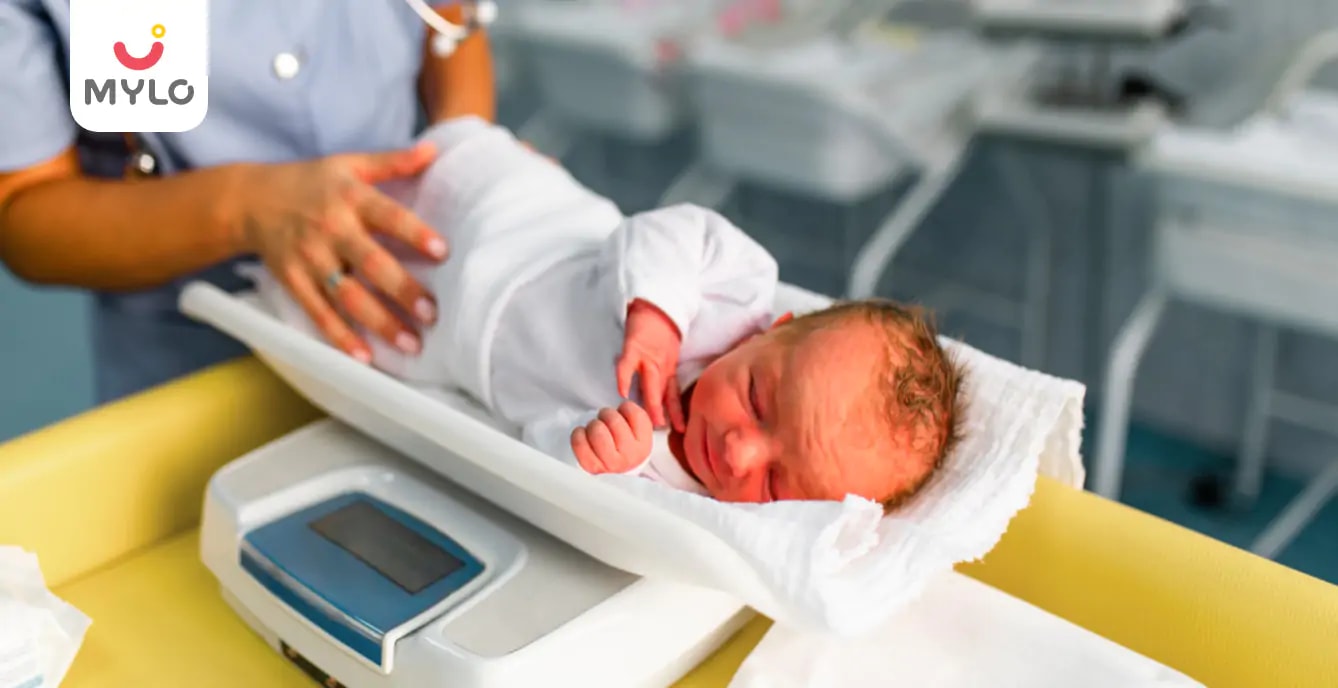
Baby Weight Chart by Month in KG (0 to 12 Months): WHO Average Weight for Boys and Girls (2026 Guide)
 40·12 min
 Height and Weight Chart for Boys and Girls in India
 33·9 min
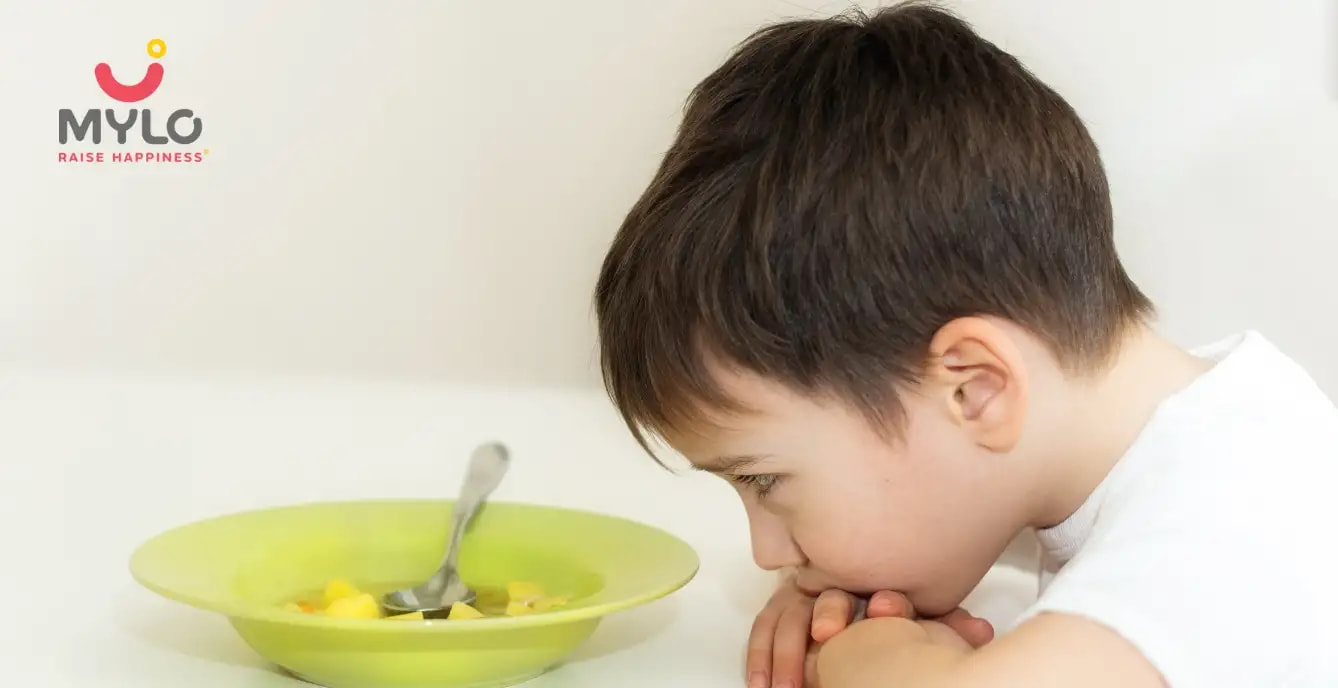
 Understanding the Reasons & Solutions for a Baby Not Eating Food
 480·8 min
 How Fetal Weight May Affect The Mother's Weight Throughout The Pregnancy?
 10·9 min
Related Topics
.webp&w=32&q=75)
Medical Disclaimer
This content is for informational purposes only and should not replace professional medical advice. Consult with a physician or other health care professional if you have any concerns or questions about your health. If you rely on the information provided here, you do so solely at your own risk.


AWARDS AND RECOGNITION

Mylo wins Forbes D2C Disruptor award

Mylo wins The Economic Times Promising Brands 2022
AS SEEN IN












- Mylo Care: Effective and science-backed personal care and wellness solutions for a joyful you.
- Mylo Baby: Science-backed, gentle and effective personal care & hygiene range for your little one.
- Mylo Community: Trusted and empathetic community of 10mn+ parents and experts.


Product Categories
Baby Carrier | Baby Soap | Baby Wipes | Stretch Marks Cream | Baby Cream | Baby Shampoo | Baby Massage Oil | Baby Hair Oil | Stretch Marks Oil | Baby Body Wash | Baby Powder | Baby Lotion | Diaper Rash Cream | Newborn Diapers | Teether | Baby Kajal | Baby Diapers Pants | Cloth Diapers | Laundry Detergent | Lactation Granules |