


Orders
.png&w=48&q=75 "login")
Profile


Wallet

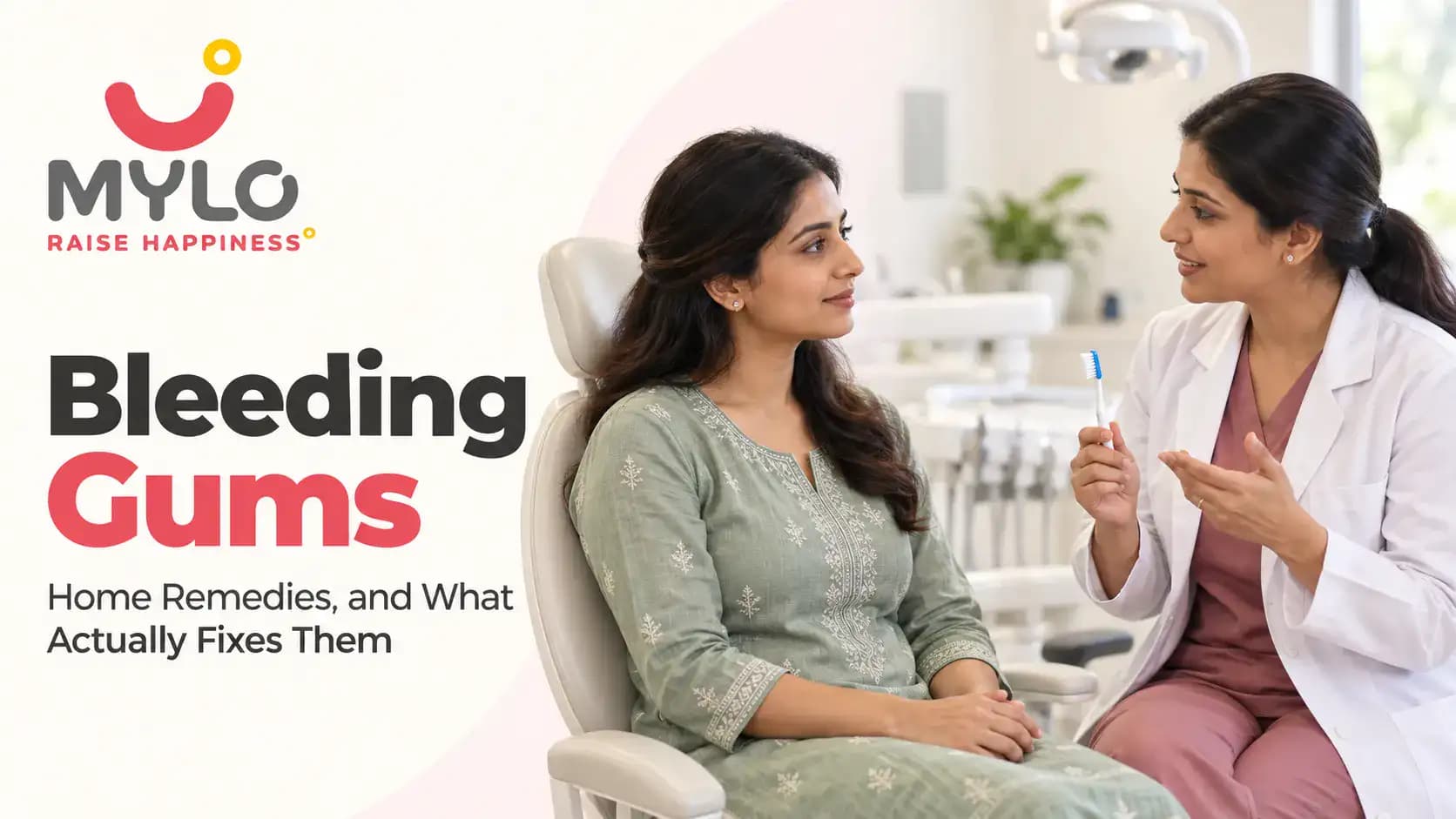
Bleeding Gums: Home Remedies, and What Actually Fixes Them
 344 Likes|
 15 min
AI-Generated Summary
Quick overview in 30 seconds.webp&w=32&q=75)
- Pregnancy often brings dental issues like bleeding gums, tooth pain, and sensitivity, and since treatments are usually postponed, home remedies offer safe relief during these nine months.
- Simple remedies like salt water rinse, pomegranate juice, aloe vera, turmeric paste, and warm milk can soothe irritated gums and fight bacteria naturally at home.
- Traditional practices such as oil pulling with coconut or sesame oil, baking soda brushing, peppermint tea rinse, and clove application work as effective antiseptic dental care options.
- Looking for pregnancy-safe oral care essentials? Explore our Pregnancy Massage Oil + Coconut Oil - 200 ml each.

 4.5
4.5Quick answer
Bleeding gums are almost always caused by plaque at the gumline, and hormonal changes in pregnancy make gums react to that plaque much more strongly. Home rinses can soothe, but they do not remove plaque. What actually stops the bleeding is brushing gently twice a day with a fluoride toothpaste, cleaning between the teeth, and a professional cleaning. Dental treatment is safe during pregnancy.
Key takeaways
Bleeding gums are a sign of inflammation, not a reason to brush less. Most people brush the area less because it bleeds, which makes it worse.
Pregnancy gingivitis is very common. Hormonal changes exaggerate the gum's response to plaque, so gums that were fine before pregnancy may bleed from around the second month.
Dental treatment is safe in pregnancy. Cleaning, fillings, local anaesthesia and X-rays with shielding are all considered safe. Postponing care is the riskier choice.
Some popular remedies are actively bad for teeth. Honey, lemon and fruit juice rinses combine sugar and acid, which is the opposite of what inflamed gums and enamel need.
Not all gum bleeding is gingivitis. Bleeding that will not stop, bleeding alongside bruising elsewhere, loose teeth, facial swelling with fever, or a mouth ulcer lasting over two weeks all need prompt assessment.
Why are my gums bleeding?
In the large majority of cases, because of plaque sitting along the gumline. Plaque is a soft film of bacteria that forms constantly. Where it is not removed, the gum next to it becomes inflamed, swollen and fragile, and it bleeds when touched. That is gingivitis, and it is reversible.
Healthy gums do not bleed when you brush. This is worth stating plainly, because a lot of people assume some bleeding is normal. It is common, but it is not normal, and it is a signal rather than a nuisance.
Why it happens more in pregnancy
Rising oestrogen and progesterone increase blood flow to the gums and change how gum tissue responds to the bacteria already present. The result is that the same amount of plaque produces much more inflammation than it would have before pregnancy.
Pregnancy gingivitis typically starts around the second month, peaks in the second and third trimesters, and settles after delivery. It does not mean you have suddenly become careless about brushing.
Some women also develop a pregnancy tumour, sometimes called a pyogenic granuloma or epulis. Despite the name, it is not cancer. It is a soft, red, often bleeding lump on the gum, usually between two teeth, which is benign and generally resolves after delivery. It should still be shown to a dentist.
Other causes worth knowing
Cause | Clue |
|---|---|
Brushing too hard, or a hard-bristled brush | Bleeding plus gum recession, sensitivity |
Not cleaning between the teeth | Bleeding mainly between teeth, where a brush never reaches |
Periodontitis | Longer-standing disease, bad breath, receding gums, loose teeth |
Tobacco, gutkha, khaini, paan masala, areca nut | Major cause of gum disease and much more serious oral conditions |
Vitamin C deficiency | Severe, spongy, spontaneously bleeding gums. Uncommon but treatable |
Low platelets or a bleeding disorder | Bleeding elsewhere too, easy bruising, nosebleeds |
Certain medications | Blood thinners, some anti-epileptics and some blood pressure drugs |
Diabetes | Gum disease is more common and more severe, and the relationship works both ways |
What actually stops bleeding gums
This is the part that works, and it is unglamorous.
Brush twice a day with a fluoride toothpaste and a soft-bristled brush. Two minutes, angled at the gumline, gentle circular or short strokes. Hard scrubbing damages gums rather than cleaning them.
Keep brushing the area that bleeds. This is counterintuitive, but gently cleaning an inflamed area is what allows it to heal. Bleeding usually reduces within one to two weeks of consistent cleaning.
Clean between your teeth daily, with floss or interdental brushes. This is where most gum bleeding starts, and where a toothbrush cannot reach.
Get a professional cleaning (scaling). Once plaque hardens into tartar, brushing cannot remove it. A dental cleaning is the single most effective step for established gingivitis.
Stop all forms of tobacco and areca nut. Gutkha, khaini, paan masala and supari are among the most damaging things for gums and for the mouth generally.
Rinse after vomiting, but do not brush immediately. If you have morning sickness, rinse with plain water or a teaspoon of baking soda in water, and wait about 30 minutes before brushing. Brushing straight after vomiting scrubs acid into softened enamel.
If your gums are still bleeding after two weeks of proper cleaning, see a dentist. That is the point at which it is no longer something home care can fix.
Home remedies: what helps, what is neutral, and what to skip
Home remedies can make an inflamed mouth feel better. None of them removes plaque, so none of them treats the cause.
Remedy | Verdict | Notes |
|---|---|---|
Warm salt water rinse | Useful | Half a teaspoon of salt in a glass of warm water. Soothing and safe. Do not swallow |
Cold compress on the cheek | Useful | Helps with swelling and discomfort |
Aloe vera mouthwash | Reasonable | Some supportive evidence as an adjunct. Use a product made for oral use, not raw gel from a plant |
Baking soda rinse | Reasonable as a rinse | A teaspoon in water is fine. Do not use it as an abrasive paste to scrub, which wears enamel |
Peppermint or green tea rinse | Neutral | Pleasant, unsweetened only. Not a treatment |
Clove or clove oil | Use with care | May numb a painful spot briefly. Undiluted clove oil can burn the gum and mucosa. Not a treatment for bleeding |
Turmeric paste | Neutral, with a caveat | Some antimicrobial interest, but it stains teeth and restorations noticeably |
Oil pulling | Not a substitute | No good evidence it treats gingivitis. Harmless if you enjoy it, as long as it is in addition to brushing, never instead |
Honey applied to gums, or honey-based rinses | Skip | Honey is sugar. Applying it to inflamed gums and teeth works against you |
Lemon juice rinses | Skip | Strongly acidic and erodes enamel, especially if you already have reflux or vomiting |
Fruit juice rinses, including pomegranate juice | Skip as a rinse | Sugar and acid on the teeth. Drink the juice if you like it, do not swish it |
Charcoal, salt and mustard oil, or abrasive manjan rubbed on gums | Skip | Abrasive, causes gum recession and enamel wear over time |
Tooth powders containing tobacco | Avoid entirely | Some traditional dental powders have been found to contain tobacco. These are harmful and should not be used |
Is dental treatment safe during pregnancy?
Yes, and this is the most important correction to make. There is a widespread belief in Indian families that dental work must wait until after delivery. That belief leads to months of untreated infection and pain, and it is not supported by guidance.
Treatment | Position in pregnancy |
|---|---|
Dental check-up and professional cleaning | Safe, and recommended. Ideally at least once during pregnancy |
Fillings and treatment of decay | Safe. Untreated decay does not improve on its own |
Local anaesthesia | Considered safe. Tell your dentist you are pregnant so they choose appropriately |
Dental X-rays | Considered safe with abdominal and thyroid shielding. Radiation dose from a dental X-ray is very low |
Root canal treatment | Safe when needed. Better than leaving an infection |
Treatment of a dental abscess or infection | Should not be delayed. Untreated dental infection is a risk in itself |
Antibiotics and painkillers | Several are considered compatible with pregnancy. Your dentist must know you are pregnant. Avoid NSAIDs from 20 weeks unless your doctor advises otherwise |
Elective cosmetic work, whitening | Reasonable to postpone until after delivery |
The second trimester is usually the most comfortable window for planned treatment, mainly because lying back is easier then than in late pregnancy. That is about comfort, not safety. Urgent treatment should happen whenever it is needed.
Tell your dentist you are pregnant, and how many weeks. In later pregnancy, ask to be positioned slightly on your left side rather than flat on your back, which is more comfortable and avoids the dizziness some women get lying flat.
Does gum disease affect the baby?
The honest answer is that we are not certain. Observational studies have found an association between gum disease and outcomes such as preterm birth and low birth weight. However, trials treating gum disease during pregnancy have not consistently shown that it reduces those outcomes, so an association is not the same as proven cause and effect.
What this means practically: do not panic about having bled gums, and do not treat this as something that has harmed your baby. Do get your gums treated, because it is safe, it relieves your symptoms, it protects your teeth, and untreated dental infection is a genuine problem in its own right. Those reasons are sufficient on their own.
What Indian families should know
Tobacco and areca nut are the single biggest oral health issue. Gutkha, khaini, zarda, paan masala and plain supari all damage the gums, and chewing areca nut is linked to oral submucous fibrosis and to oral cancer. India carries one of the highest oral cancer burdens in the world. If anyone in the household uses these, bleeding gums are a good moment to raise it.
Check what is in your tooth powder. Some traditional dental powders and pastes have been found to contain tobacco. If you use a loose manjan or an unbranded powder, switch to a branded fluoride toothpaste.
Neem datun and salt-and-oil massage of the gums are common practices. Neem twigs are not harmful in themselves, but hard rubbing and abrasive mixtures cause gum recession over years. A soft toothbrush with fluoride toothpaste cleans better.
Morning sickness and teeth. Repeated vomiting is hard on enamel. Rinse with water or a baking soda solution, and wait half an hour before brushing.
Dental care is often deprioritised in pregnancy for cost and access reasons. Government dental colleges and hospitals offer treatment at low cost, and dental care is covered in some health schemes. One cleaning during pregnancy is a worthwhile use of a visit.
When should you see a dentist or doctor?
See a dentist soon if you have:
Gums that still bleed after two weeks of proper brushing and interdental cleaning
Visible tartar buildup, or you have not had a cleaning in over a year
Persistent bad breath or a bad taste
Gums pulling away from the teeth, or teeth looking longer
Any tooth that feels loose or has shifted
A lump on the gum, including a soft red one that bleeds easily
Pain when chewing
You are pregnant and have not had a dental check in this pregnancy
Seek care urgently if you have:
Facial or jaw swelling, fever, or difficulty opening your mouth or swallowing. These suggest a spreading dental infection and need same-day treatment
Bleeding that does not stop with gentle pressure
Gum bleeding along with easy bruising, nosebleeds, or bleeding elsewhere. This may indicate a platelet or clotting problem, which needs blood tests, and in pregnancy this should be checked promptly
Severe, spontaneous bleeding from the gums without brushing
A mouth ulcer, white or red patch, or lump that has not healed in two weeks, particularly with any history of tobacco or areca nut use
Numbness of the lip or chin, or a persistent unexplained loose tooth
Frequently asked questions
Is it normal for gums to bleed during pregnancy?
It is common, affecting a large proportion of pregnant women, but it is not something to simply accept. It responds well to careful cleaning and a professional scaling.
Should I stop brushing the area that bleeds?
No. Gently cleaning the inflamed area is exactly what allows it to heal. Use a soft brush and be thorough rather than forceful.
Can I get a dental cleaning while pregnant?
Yes. Professional cleaning is safe and recommended during pregnancy. Tell your dentist how many weeks you are.
Are dental X-rays safe in pregnancy?
Dental X-rays with abdominal and thyroid shielding are considered safe. The dose is very low. Your dentist will only take them if needed.
Can I use a medicated mouthwash?
Ask your dentist. Some antiseptic mouthwashes are used for short courses under supervision. Avoid alcohol-containing mouthwashes and long-term unsupervised use, which can stain teeth.
Does oil pulling cure bleeding gums?
No. There is no good evidence it treats gingivitis. It is harmless as an addition if you enjoy it, but it does not replace brushing, interdental cleaning or a professional scaling.
Is salt water rinsing enough?
It soothes but does not remove plaque. Use it alongside proper brushing rather than instead of it.
My gums bleed and I also bruise easily. Is that related?
It may be. Bleeding from more than one site can indicate a platelet or clotting issue, which is worth checking with blood tests, particularly in pregnancy.
Will my gums go back to normal after delivery?
Pregnancy gingivitis usually improves substantially after delivery, provided the plaque is being removed. If gum disease was already established before pregnancy, it needs treating rather than waiting.
I have a red lump on my gum that bleeds. Should I worry?
Show it to a dentist. In pregnancy this is often a benign pregnancy tumour that resolves after delivery, but it should be examined rather than assumed.
The bottom line
Bleeding gums are a plaque problem that pregnancy hormones amplify, which means the fix is mechanical rather than herbal. Brush gently twice a day with fluoride toothpaste, clean between your teeth, and get a professional cleaning. Salt water and aloe rinses can soothe along the way, but skip the honey, lemon and juice rinses, which add sugar and acid to the exact place you are trying to heal. And if you have been told to postpone dental treatment until after delivery, that advice is outdated. Dental care is safe in pregnancy, and untreated infection is not.
Sources
American College of Obstetricians and Gynecologists, oral health care during pregnancy and through the lifespan
American Dental Association, oral health topics on pregnancy and gingivitis
NHS, gum disease, and dental treatment during pregnancy
World Health Organization, oral health and tobacco and areca nut use
Federation of Obstetric and Gynaecological Societies of India, antenatal care guidance
Indian Dental Association, oral health guidance
Cochrane Database of Systematic Reviews, treating periodontal disease for preventing adverse birth outcomes
National Oral Health Programme, Ministry of Health and Family Welfare, Government of India
This article is for general information and is not a substitute for professional dental or medical advice. See a dentist promptly for facial swelling, fever, bleeding that will not stop, or a mouth ulcer that has not healed in two weeks.
Trusted By Mamas Caring For Pregnancy Smiles
Gentle, pregnancy-safe oral care essentials to soothe sensitive gums and keep your smile healthy through every trimester.
Baby Lotion (100 ml) + Baby Soap (75 gm)
Made Safe Australia Certified | Dermatologically Tested | Long Lasting 24 Hours Moisturization| Soothes Dryness



Article Posted Under
Related Articles
5 Tips to Boost Your Chances of Having a Problem-Free Pregnancy & Have a Healthy Baby
 96·3 min
 Reducing Tummy Fat After Delivery: What Actually Works
 37·13 min
 How Much Time Does It Take To Get Back Into Old Shape After Delivery With a Diet Plan?
 5 min
5 min Home Remedies to Control High Blood Pressure in Pregnancy
 1·8 min
Related Topics
.webp&w=32&q=75)
Medical Disclaimer
This content is for informational purposes only and should not replace professional medical advice. Consult with a physician or other health care professional if you have any concerns or questions about your health. If you rely on the information provided here, you do so solely at your own risk.


AWARDS AND RECOGNITION

Mylo wins Forbes D2C Disruptor award

Mylo wins The Economic Times Promising Brands 2022
AS SEEN IN













- Mylo Care: Effective and science-backed personal care and wellness solutions for a joyful you.
- Mylo Baby: Science-backed, gentle and effective personal care & hygiene range for your little one.
- Mylo Community: Trusted and empathetic community of 10mn+ parents and experts.


Product Categories
Baby Carrier | Baby Soap | Baby Wipes | Stretch Marks Cream | Baby Cream | Baby Shampoo | Baby Massage Oil | Baby Hair Oil | Stretch Marks Oil | Baby Body Wash | Baby Powder | Baby Lotion | Diaper Rash Cream | Newborn Diapers | Teether | Baby Kajal | Baby Diapers Pants | Cloth Diapers | Laundry Detergent | Lactation Granules |